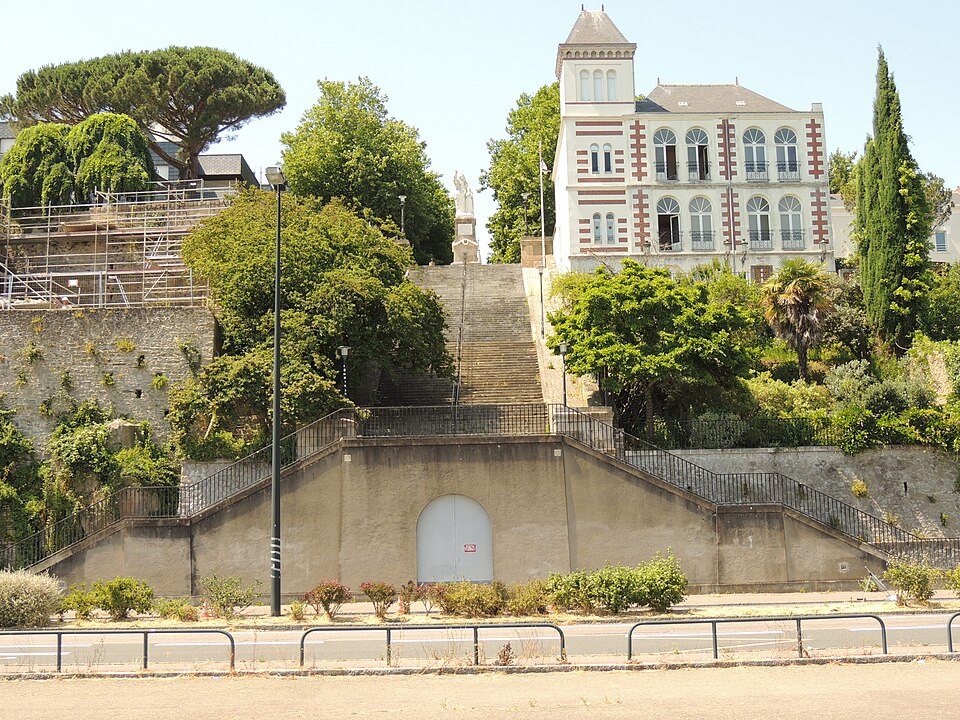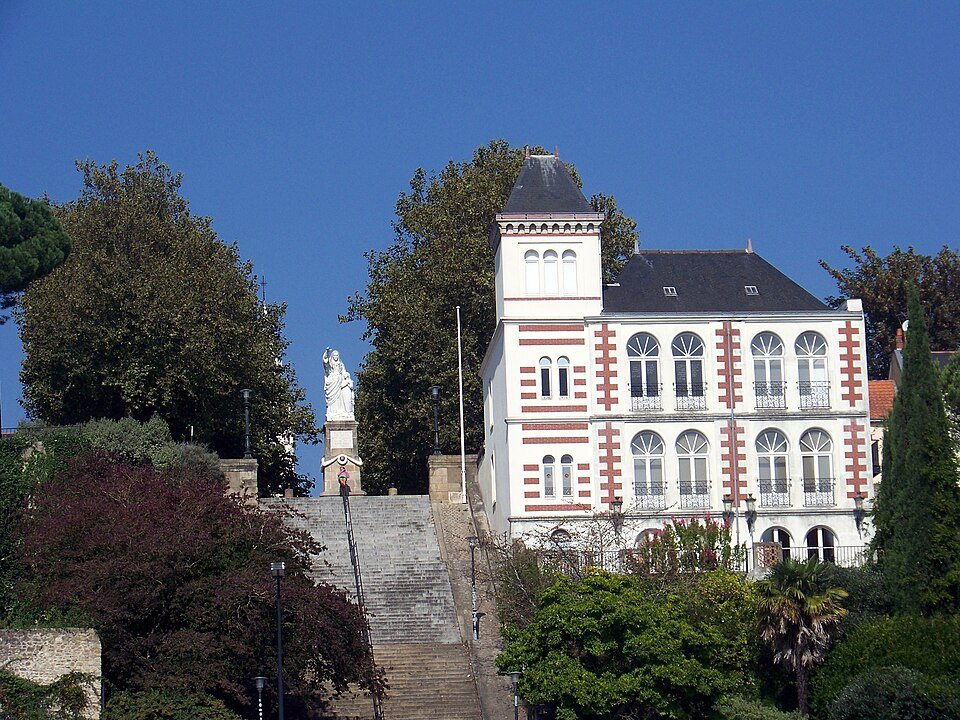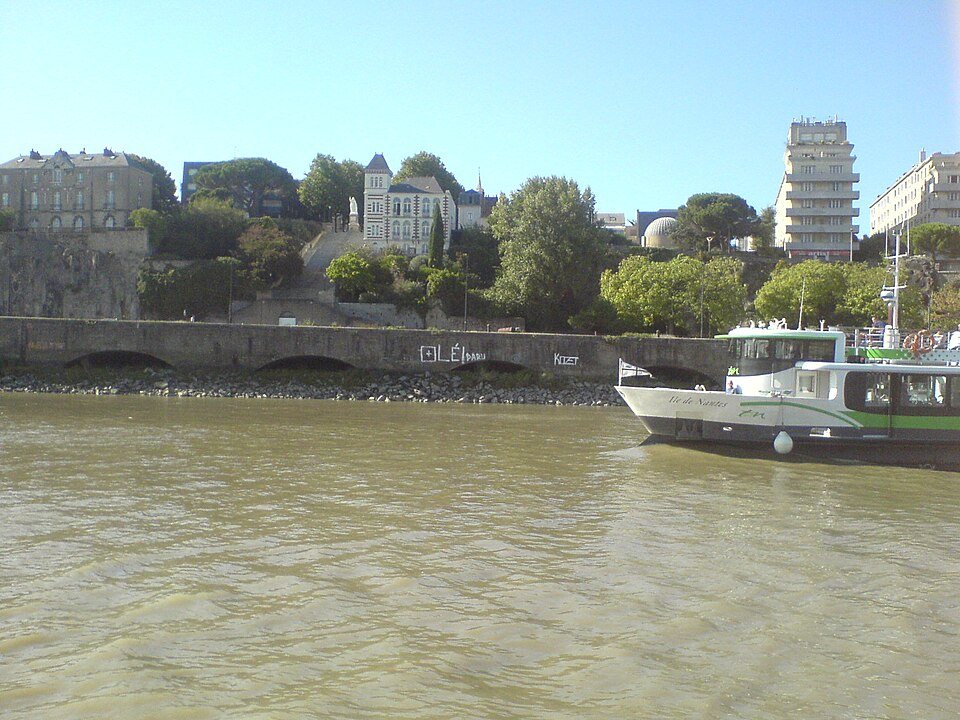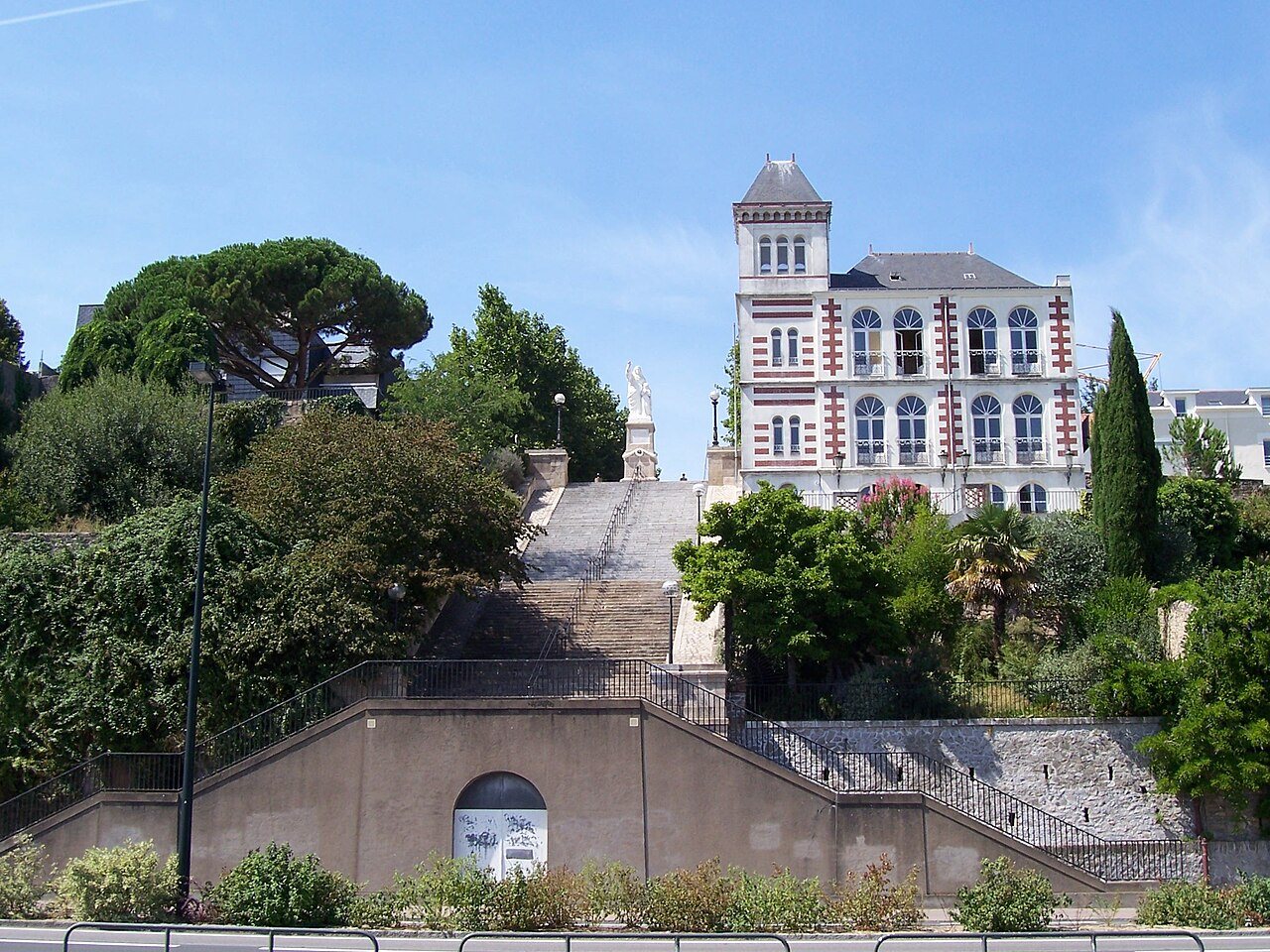
Jules Verne was born in Nantes in 1828, in a house near the old port, at a time when the Loire here was crowded with merchant ships, timber rafts, and ocean-going vessels waiting for cargo. He did not grow up imagining distant continents in the abstract. He grew up watching them arrive, flag by flag, at the end of his street. The Musée Jules Verne takes this seriously, and the building itself argues the point before you have read a single label: it stands on high ground overlooking the water, which is exactly where a Nantes child of that era would have gone to watch ships come in.
A port city that made the man
Nantes in Verne's childhood was not a backwater with a famous son. It was one of France's major Atlantic ports, with wealth and goods moving through its quays for centuries, including the long and brutal trade in enslaved people that built parts of the city's fortune — a history the Memorial to the Abolition of Slavery addresses directly, if you want the fuller picture before or after visiting the Verne museum. Verne's own family was comfortably bourgeois rather than seafaring, his father a lawyer, but the city around him ran on shipping, shipbuilding, and the stories sailors brought home. It is often told, as a kind of founding anecdote for his later life, that he once tried to get himself aboard a ship bound for the Indies as a boy and was caught before it left the Loire. Whether that exact episode happened as usually described is one of those biographical stories that has hardened into legend over a century and a half of retelling, and it is worth holding loosely rather than repeating as fact. What is not in dispute is the setting: a river mouth city where leaving by water was a real and visible possibility, not a metaphor.
That matters for how you read the museum. Verne wrote about journeys to the center of the earth, around the moon, twenty thousand leagues under the sea, but almost none of his adventuring heroes start from nowhere. They start from ports, piers, and the edges of cities very like the one he grew up in.
The house on the Butte Sainte-Anne
The museum occupies a house on the Butte Sainte-Anne, a steep rise on the right bank across from the city center, and the climb up is part of the experience rather than an inconvenience to tolerate. From the top you get one of the better open views over the Loire and the rooftops of Nantes, the kind of vantage point that explains, better than any object in a display case, why a child with an eye for horizons might have spent time up here. Look for the sightline down to the water and try to trace where the old port activity would have been thickest; it reorients the whole visit.
Inside, the collection draws on Verne's own working life as a writer — manuscripts, personal objects, early editions, the kind of material a dedicated author museum accumulates — and visitors should go in expecting a portrait of a working writer rather than a theme-park version of his novels. If you want the theme-park version, that experience lives a short distance away on the river itself, where the Machines de l'île project borrows Verne's mechanical imagination (crossed with the illustrator Albert Robida's) and builds it at full scale, including a mechanical elephant that walks. The two sites talk to each other across the water and are worth treating as a pair: one is where the imagination was formed, the other is what happens when a city decides to build that imagination literally.
Because the museum is a city-run house with its own rhythm of opening and closed days, and because arrangements for tickets and access can change, check directly with the museum before planning your visit around it — their own site is the only reliable source for current details.
What the river still shows you
The Loire that Verne watched as a boy is not the same working river today. Shipping shifted downstream decades ago toward Saint-Nazaire, and central Nantes lost most of its commercial port traffic as cargo ships grew too large to come this far inland. What is left is a quieter stretch of water, but one that still rewards the same habit Verne apparently had: standing at the edge of it and looking. The Quai de la Fosse, downstream from the Butte Sainte-Anne, was the old shipowners' quarter and still has the scale and proportions of a working waterfront even with the ships gone. A little further along, the Hangar à Bananes is a literal relic of the port's twentieth-century cargo trade, repurposed rather than demolished, which is as good a one-building summary of the port's decline and reinvention as the city offers.
Cross to the far bank and the fishing village of Trentemoult gives you the river from the opposite angle: low colorful houses facing the city rather than the other way around, a reminder that Nantes was never just one shoreline looking outward. For context on how central the river has been to the city's identity and self-mythology, well beyond Verne, the Port and Memory trail and the broader notes on the river itself are useful companions to this museum rather than substitutes for it.
Making a day of it
A practical order that respects the geography: start at the Musée Jules Verne on the Butte Sainte-Anne for the view and the biography, walk down toward the river and along the Quai de la Fosse to feel the old port scale, then either continue to the Machines de l'île to see Verne's imagination built at full size, or head into the center toward the Château des ducs de Bretagne and the Musée d'arts de Nantes if you want a wider sense of what else this city has collected over the centuries. None of these sites require you to already know Verne's novels. What they ask, collectively, is that you notice the water, the way a Nantes child in the 1830s apparently could not help but do.
In pictures