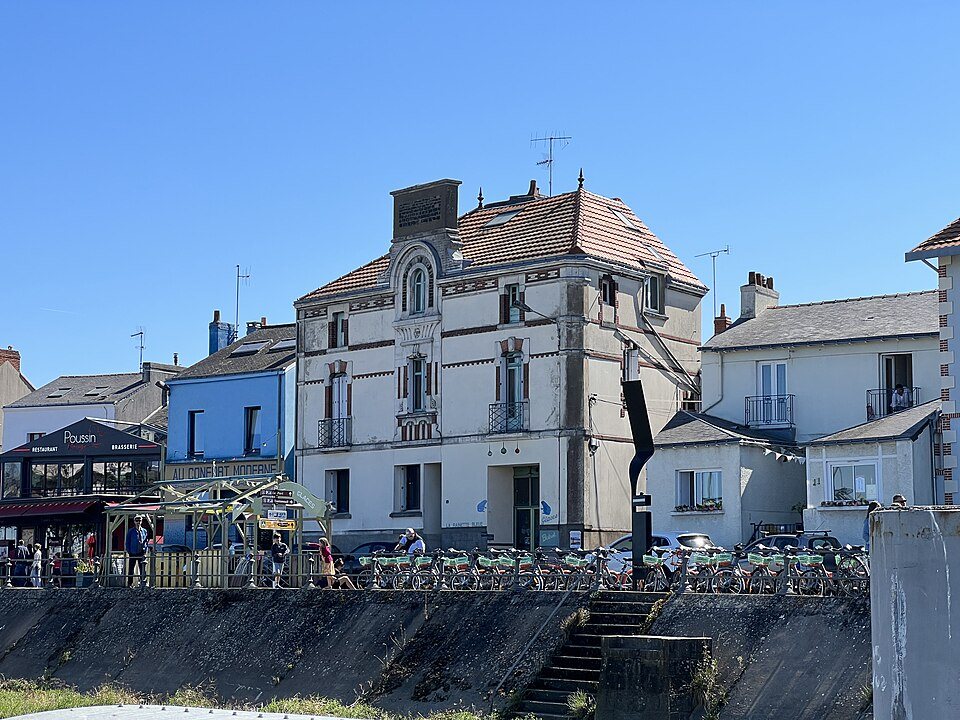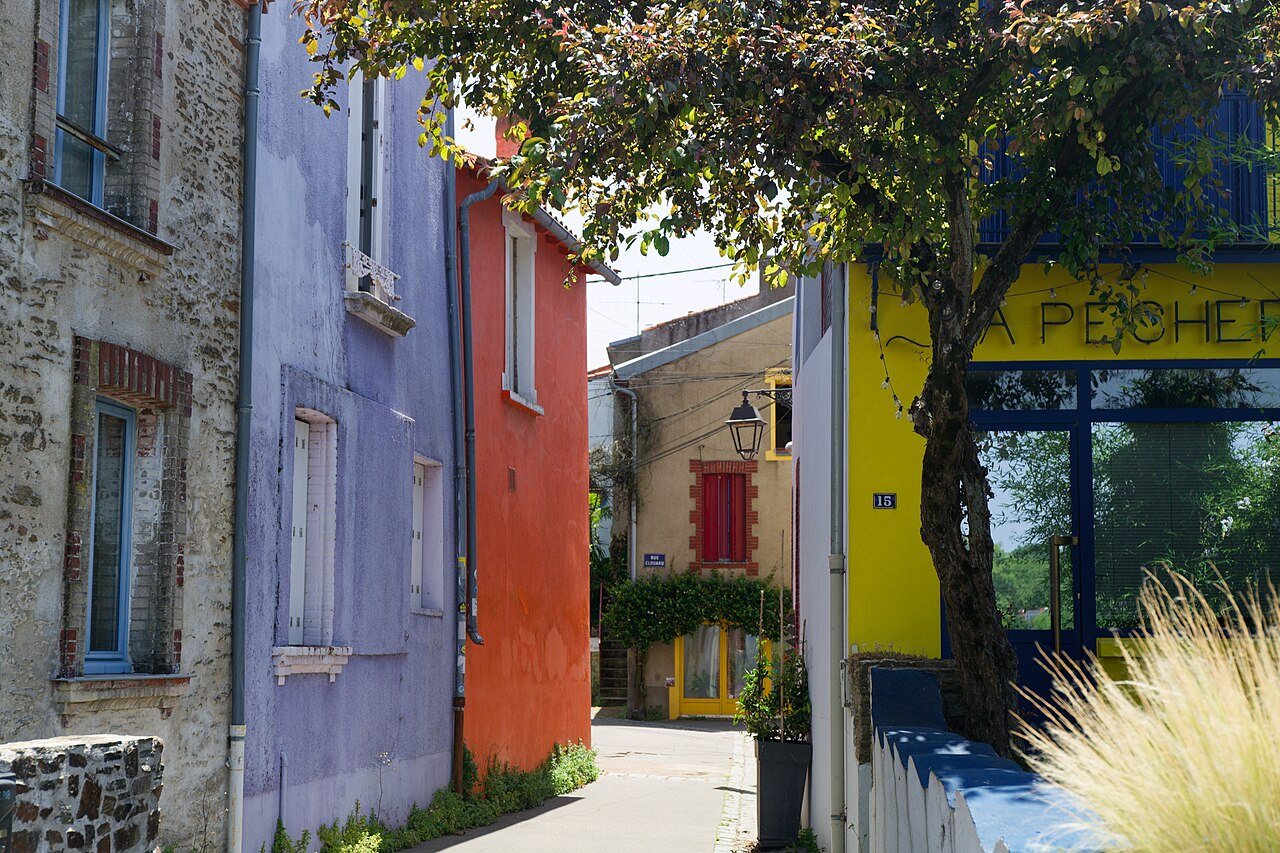
The Navibus crosses the Loire from Gare Maritime and is part of the city's public transport network rather than a tourist boat — which makes the crossing itself one of the cheapest good things to do here.
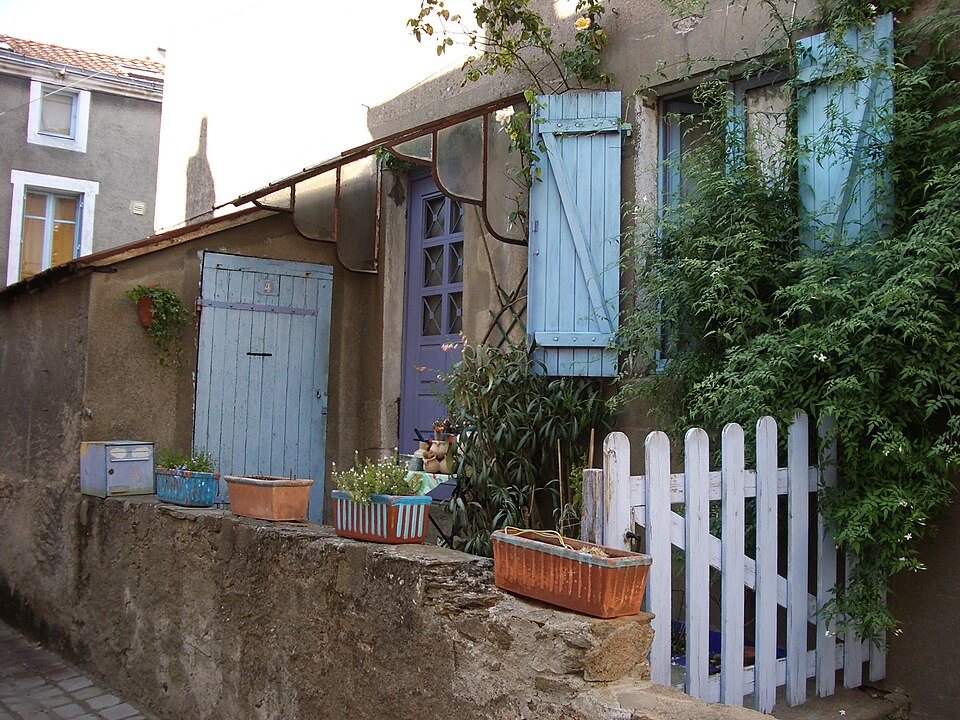
On the other side is a dense tangle of lanes too narrow for cars, with houses painted in strong colors. The usual story is that fishermen used leftover boat paint; whatever the origin, the effect now is deliberate and maintained.
There are restaurants along the waterfront looking back at the city.
Go over in the late afternoon and come back after dark. Nantes from the water at night is the view most visitors never get.
An island among islands
Trentemoult is a former village of fishermen and sailors on the left bank of the Loire, part of the town of Rezé rather than Nantes itself. It once stood on one of the islands of Rezé, bounded by the Loire to the north and a side channel, the Seil, to the south; filling in the Seil ended its life as an island. From upstream to downstream the islands held the Île des Chevaliers, with its villages of Haute-Île and Basse-Île, the hamlet of North House, known locally as Norkiouse, and Trentemoult, and the same families lived on them for centuries.
The name probably comes from trente moux, thirty mounds, as it appears on the Cassini maps of the eighteenth century; a map of 1778 and the land register of 1827 call it the isle de trentemoux. A more heroic legend says it recalls thirty brave men who fought the Vikings during the Norse siege of Nantes in the ninth century.
Fishermen, then captains
Until the early nineteenth century the villagers lived almost entirely from fishing, protected by a privilege in the Loire estuary granted in 1397 by Duke Jean IV. They fished from small flat-bottomed boats called barges, two men to a boat on the river and three at sea, ranging as far as La Rochelle and Lorient, and every autumn they went to the bay of Mesquer for herring. The seasons of 1756 and 1757 were exceptional and brought the community a fortune.
In the nineteenth century the men turned from fishing to merchant shipping, first along the coast and then on long-distance voyages, and Trentemoult became one of the main sources of merchant officers for the port of Nantes. Among its captains were Julien Chauvelon, master of the Belem for thirteen years, and Georges Aubin, who wrote accounts of his voyages. Shipyards grew up on the islands to serve them, first at Trentemoult and then, for lack of space, at Norkiouse: the Chauvelon and Lemerle yards in the first half of the century, and Boju, Clergeau and Tillé in the second. At their peak they launched brigs and three-masted ships.
How the houses work
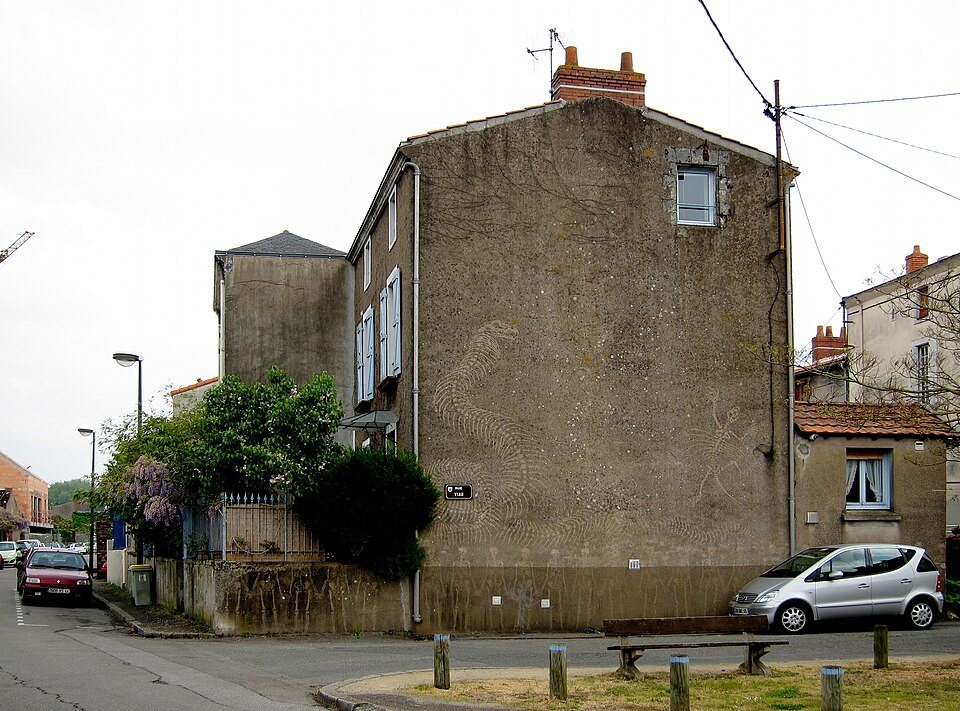
The traditional fishermen's houses were built for the Loire's floods, usually on three levels: a cellar on the ground floor that could flood, the living room above it, and an attic at the top that sometimes connected with the neighbors' attics, so people could visit each other in high water without a boat. Stairs were normally outside, leading straight to the living floor. The quais Surcouf, from 1850, and Marcel-Boissard, built between 1860 and 1888, reduced the flooding, and the last great floods were those of 1910 and 1935. In the second half of the nineteenth century captains, including Cape Horners, built larger houses around the old village, with gardens full of exotic plants brought back from their voyages.
Decline and comeback
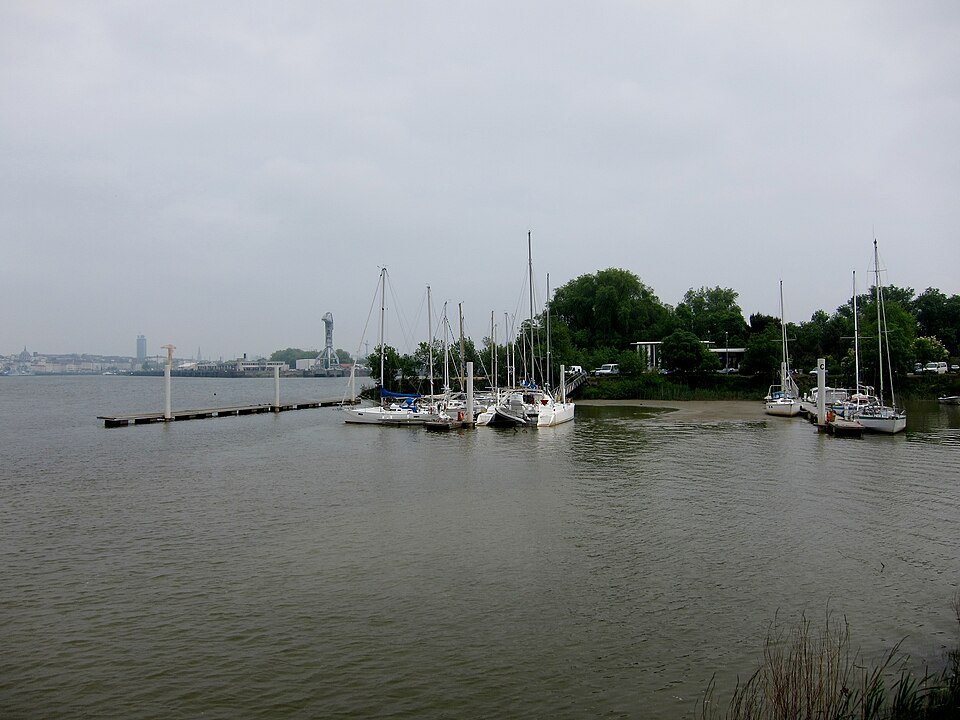
By the end of the nineteenth century the village was a favorite outing for people from Nantes, especially after the river shuttle boats known as roquios began running in 1887, bringing them to regattas, swimming and open-air dance halls. Meanwhile the residents had become workers in the Nantes shipyards. In 1946 the village was declared unsanitary, and in 1970 the roquio line closed. A marina opened in 1979, and in 1990 Jean-Loup Hubert filmed La Reine blanche here with Catherine Deneuve, which made the village fashionable again; Claude Chabrol followed with La Demoiselle d'honneur in 2005. The river link to Nantes was restored the same year, and it is the Navibus that now carries on the tradition of the roquios.
The village has its place in literature too. In Pierre Schoendoerffer's novel Le Crabe-Tambour, published in 1976, the narrator remembers being taken to Trentemoult as a child on spring Sundays before the war, to visit an old friend of his father's, a deep-sea captain who had sailed for the Bordes line. Today the old fishermen's quarter is known above all for its colored houses, each facade painted and personalized by its owners.
Sources
Trentemoult in pictures