Jules Verne was born in Nantes in 1828 and spent his childhood here, on a river full of vessels bound for the Americas and Africa. He wrote later that the sight of the port was the whole origin of his imagination.
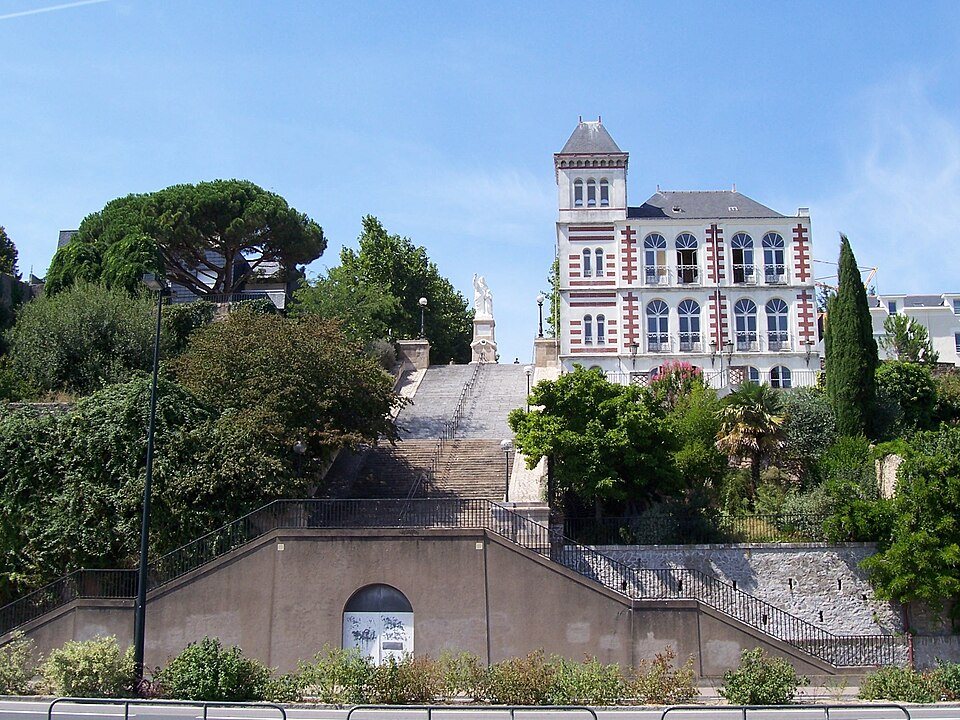
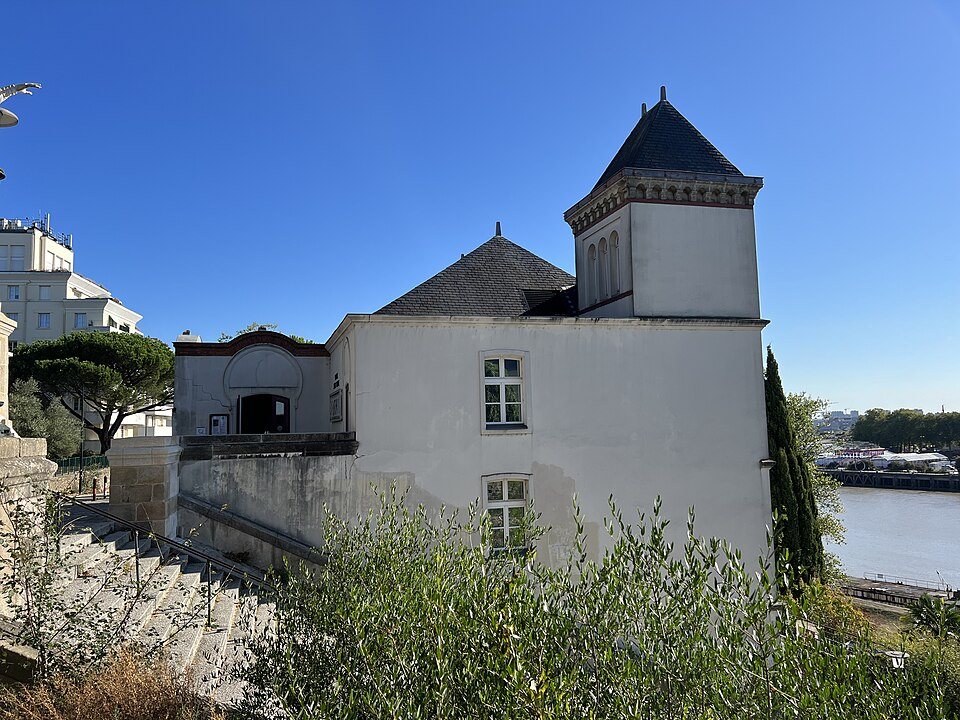
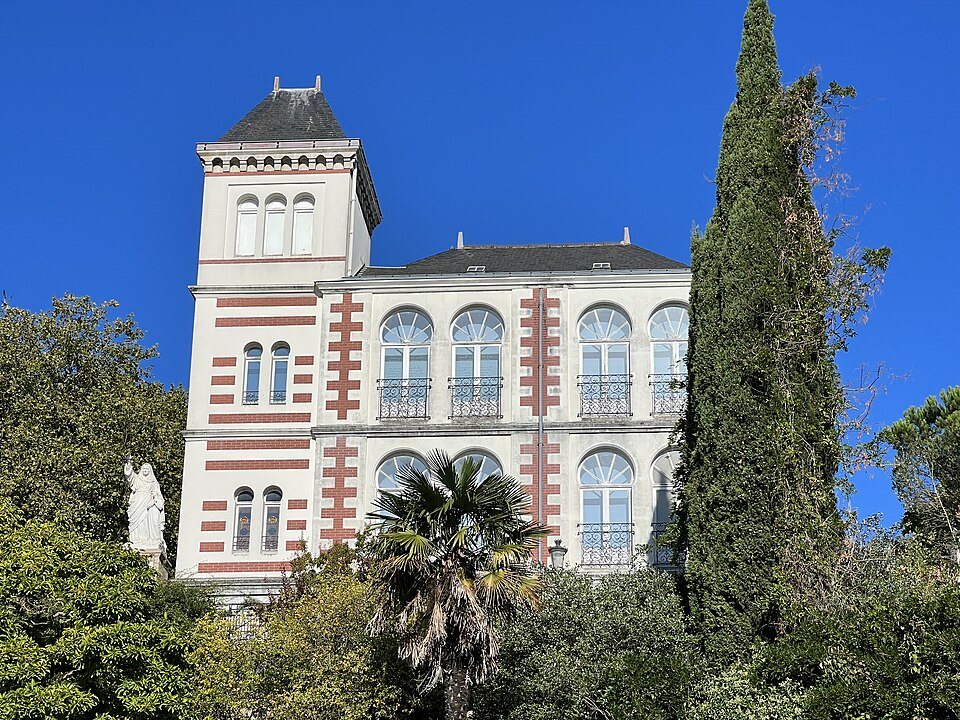
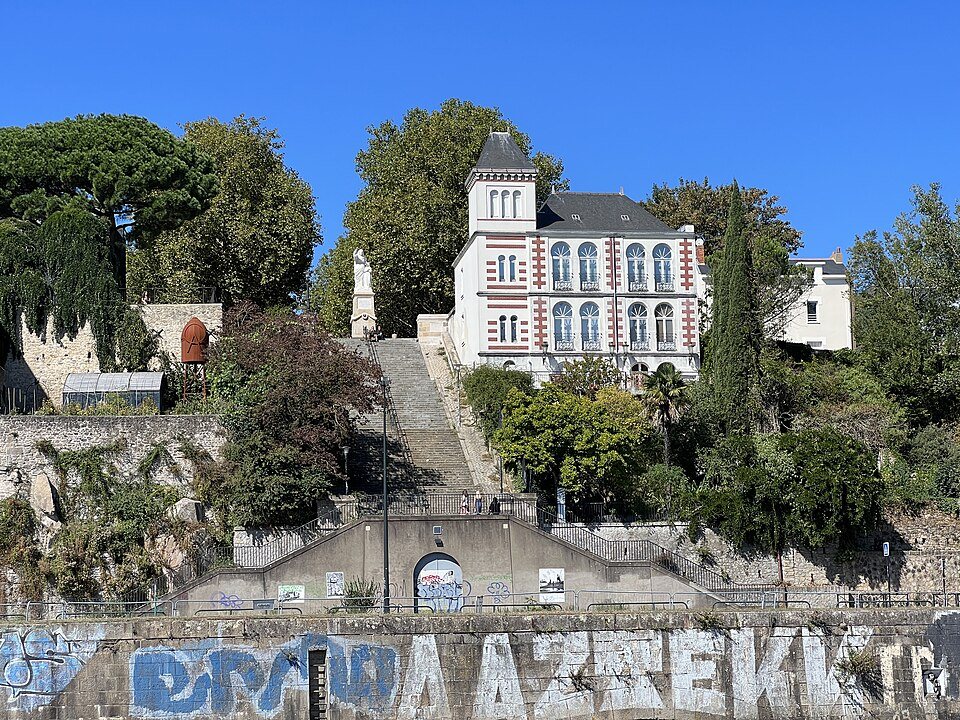
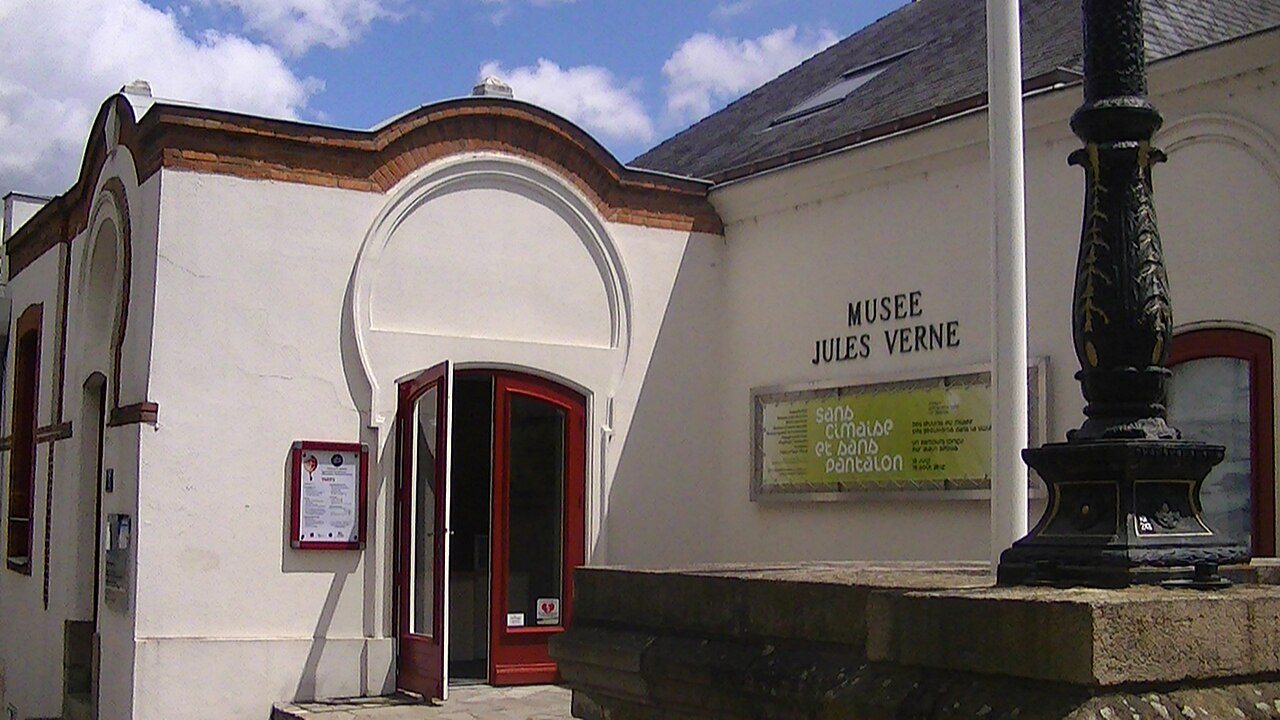
The museum is in a house on the Butte Sainte-Anne, overlooking the Loire. It is small — books, manuscripts, illustrations, posters and objects that belonged to him — and it is about the making of the books rather than a general biography.
The city keeps Verne close: there is a Verne-inspired carousel on the island and machines descended from his imagination a kilometer downstream.
Combine it with the Butte Sainte-Anne view, which is right outside the door and free.
The museum and its house
The museum opened in 1978, for the 150th anniversary of the writer's birth, the work of the painter Jean Bruneau with Luce Courville, curator of the city library. It occupies a large bourgeois house built between 1872 and 1878 by the architect Ernest-Marie Buron, at 3 rue de l'Hermitage on the top of the Butte Sainte-Anne, near the Sainte-Anne staircase that leads down to the quai Marquis-d'Aiguillon. The city bought the house in two stages, in 1965 and 1973, after it had been divided into apartments. The house has no direct link to Verne or his family, but it stands high above the Loire and the port he grew up beside. Since January 1, 2015, it has been run by the metropolitan authority rather than the city. It was renovated in 2005, the centenary of his death.
The collection includes books, manuscripts, documents, extracts from the novels, illustrations, posters and portraits, and games and objects that belonged to Verne, bequeathed by his descendants.
A move planned
Nantes Métropole plans to move the museum around 2028 to a new site four times larger, the former Grands Moulins de Loire flour mill on the riverbank opposite the Misery quarry and its Jardin extraordinaire. That concrete building, put up in 1895, was one of the first in the world built with the Hennebique reinforced concrete system. It is to hold the museum's collections, enlarged with the city library's Verne holdings, along with a library, a restaurant and terraces. Check which building the museum is in before you go.
Verne's Nantes
Jules Verne was born on February 8, 1828, at 4 rue Olivier-de-Clisson on the Île Feydeau, in his maternal grandmother's home. His father, Pierre, was a lawyer from Provins; his mother, Sophie Allotte de La Fuÿe, came from a Nantes family of navigators and shipowners. In 1829 the family moved to 2 quai Jean-Bart, close by, and in 1840 to a large building at 6 rue Jean-Jacques-Rousseau, near the port. Jules was the eldest of five children; his brother Paul became a sailor and also a writer. At six he was sent to a small school run by a Madame Sambin, said to be the widow of a Cape Horn captain, and he went on to the Collège Saint-Stanislas, the minor seminary of Saint-Donatien and the Lycée Royal, now the Lycée Clemenceau. With his school friends he joined a circle that met in Père Bodin's bookshop on the Place du Pilori in the Bouffay, and he passed his baccalauréat at Rennes in 1846.
Holidays were spent at the family's country villa in Chantenay, which still stands at 29 bis rue des Réformes opposite the church of Saint-Martin, not far from the museum, and at Brains, south-west of Nantes, with his great-uncle Prudent Allotte de la Fuÿe, a former shipowner who had traveled widely and with whom the boy loved to play long games of the game of the goose. Family legend has it that at eleven Jules tried to sign on as a cabin boy on a ship bound for the Indies, to bring back a coral necklace for his cousin Caroline Tronson, and that his father caught him just in time at Paimbœuf. In his own recollections the story is smaller: he went aboard a sailing ship while it was unguarded, explored it and turned the wheel, and was scolded by the captain.
His father sent him to Paris in 1847, mainly to study law but perhaps also to keep him away from Caroline Tronson, and he left Nantes for good in July 1848. He refused to take over his father's practice in 1852, chose writing instead, and found success in 1863 with Five Weeks in a Balloon, published by Pierre-Jules Hetzel. His Voyages extraordinaires ran to 62 novels and 18 short stories, among them Twenty Thousand Leagues Under the Seas and Around the World in Eighty Days. He died in Amiens on March 24, 1905.
Sources
Musée Jules Verne in pictures