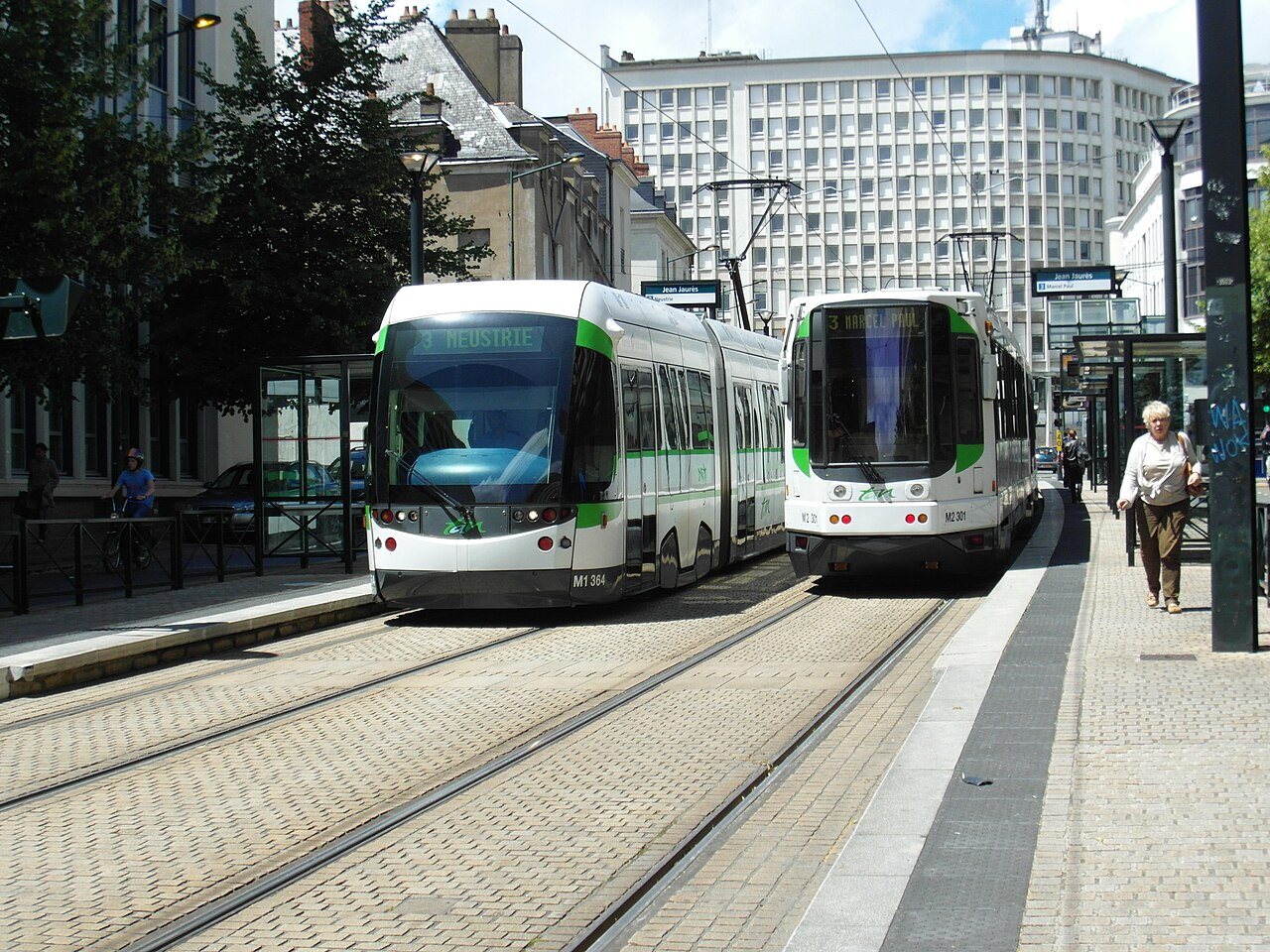
Nantes scrapped its old trams in 1958, like every other French city. Then in 1985 it became the first to build a modern one — and the rest of France followed. Nearly every French tram network you have ridden exists because this one worked.
Three lines cross at Commerce in the middle of town, and between them they reach the station, the island, the university and the western quays. There is also a Navibus river shuttle on the same ticket, which is how you get to Trentemoult.
Buy your ticket from the machine at the stop, since none are sold on board, and validate it in the machine by the door as soon as you board. Inspectors are routine and a validated ticket is the whole defense.
The river shuttle is on the ordinary network ticket. Most visitors pay for a boat trip without realizing the crossing is public transport.
The first trams ran on air
Nantes had trams long before 1985. The first line opened in 1879, running from Doulon in the east to the Gare Maritime in the west, with cars driven by compressed air on the Mékarski system: the cars carried air in steel cylinders and topped up with air and steam, used to warm it, at recharging stations. Painted yellow, they were nicknamed the Péril jaune. In 1911 the mayor Paul Bellamy announced the electrification of the network, and by 1932 there were 20 lines on 14 routes, all centered on the Place du Commerce, which is still the heart of the network today. The old system closed in 1958.
Why it came back
By the end of the 1970s traffic in Nantes was dominated by the car, and a plan to build an expressway along the quays of the Erdre caused such an outcry over the damage it would do to the city that it was dropped. Better buses and trolleybuses were rejected as too small, and a metro as too expensive. The answer was a modern tram, and the first line opened on January 7, 1985, from Haluchère in the east to Commerce, then Bellevue in the west, 27 years after the old network closed. It was the first tram network to be recreated in France after the old ones had been dismantled.
Line 1 ran entirely on its own track, much of it on the trackbed of a line of the old network. It was planned for 2,500 passengers an hour at the peak and 58,000 a day, with a tram every four minutes in the rush hour. Half of the investment, excluding the trams, came from the state, and the rest was repaid by raising the transport levy paid by employers.
The trams themselves
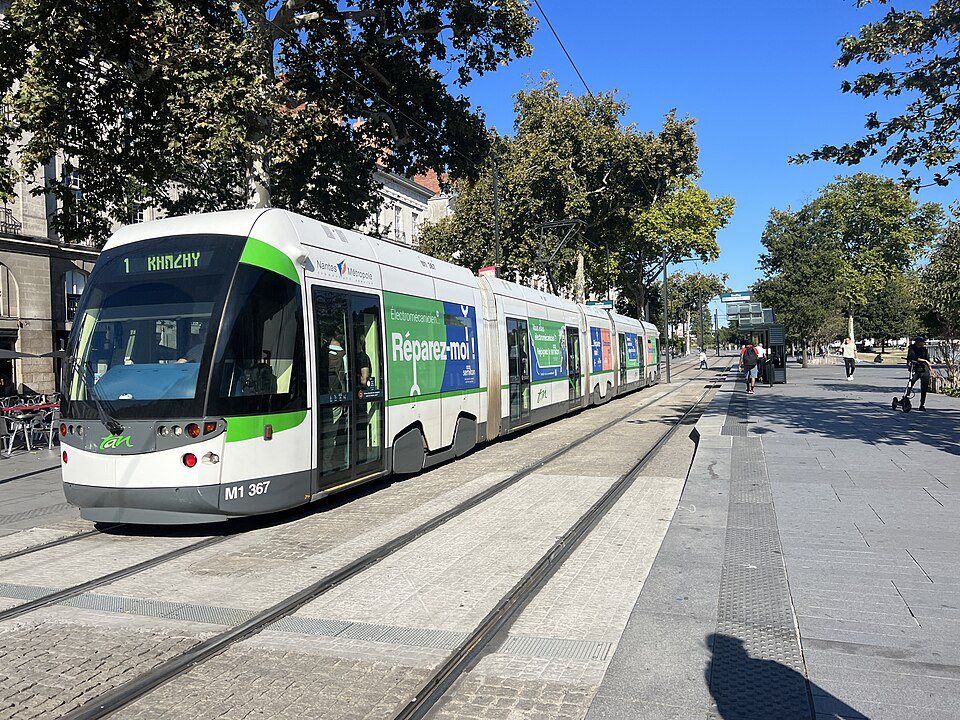
Line 1 opened with 20 Alstom TFS-1 cars, the original version of the design meant to become the French standard tram; it was revised for Grenoble, the second network, so Nantes is the only city that ever ran the TFS-1. In 1997 Nantes became the first city to order trams of the low-floor Incentro design from the German maker Adtranz, five-section cars more than 36 meters long, and later added Urbos trams from the Spanish maker CAF. In 2020 the operator ordered long Alstom Citadis trams, 48 meters in length, to replace the original cars.
The network today
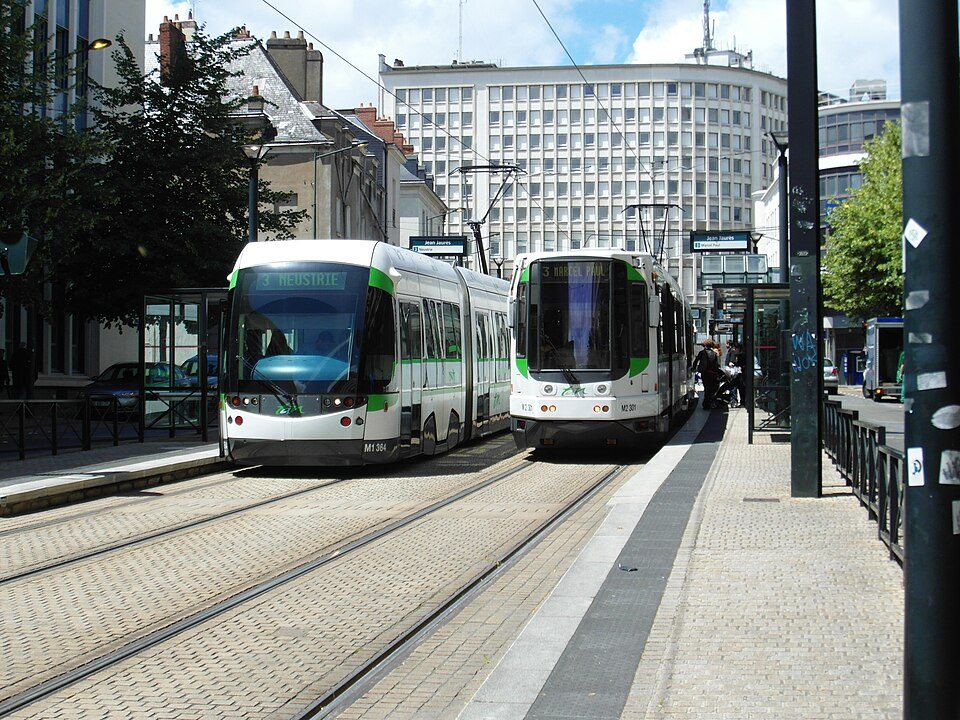
The tram network is 44 kilometers long with 83 stations, and it carried 69.2 million journeys in 2012, about 274,300 on a typical school-term weekday; line 2 alone is one of the busiest tram lines in France, and lines 1 and 2 are often packed at rush hour. Line 1 serves the main railway station, the Beaujoire stadium and the exhibition center, and the city's largest public library; line 2 serves the university campus at Petit Port, the racecourse and the Hôtel-Dieu, the main hospital; line 3 runs south to Neustrie, near the airport, where a shuttle bus covers the last short stretch. Lines 4 and 5 are not trams but Busway lines, a bus rapid transit system; line 4 opened in 2006, its ridership doubled within a decade, and its electric double-articulated buses won the international transport association UITP's award for operational and technological excellence in 2021. Line 3 opened in August 2000. The whole network is run by Semitan, known as TAN, which is majority-owned by Nantes Métropole, with the transport group Transdev as a minority shareholder.
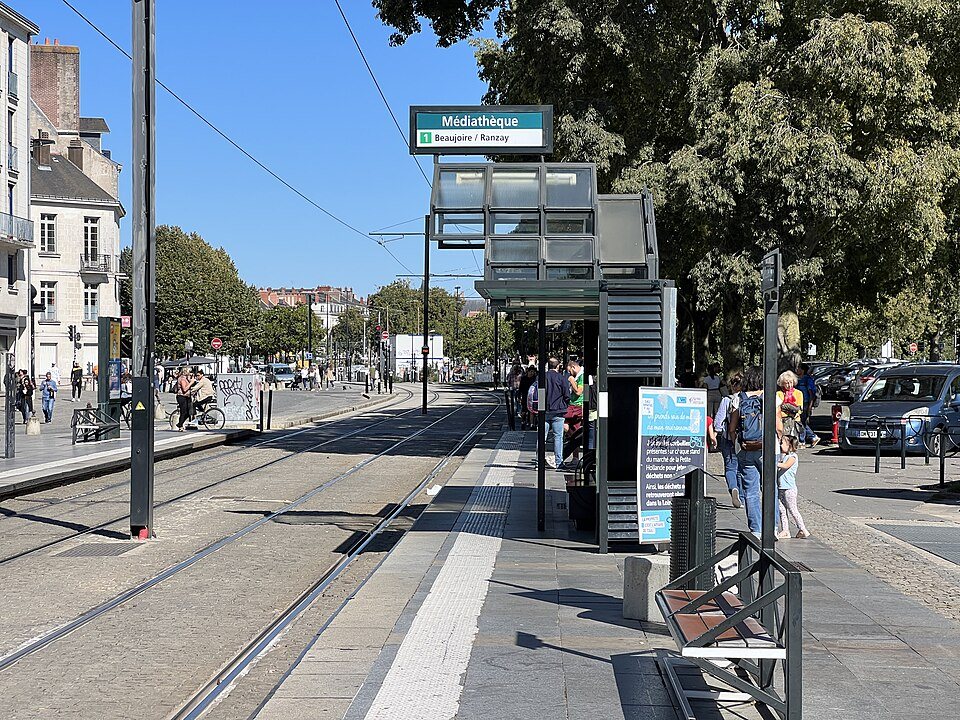
One ticket covers the trams, the Busway, the buses, the Navibus river shuttles and suburban trains within Nantes Métropole, with free transfers and no zones. Every stop has a ticket machine that takes cash and cards, and real-time displays showing the next tram. Some major stops also have validators on the platform, but the ones you can count on are at each door inside the tram.
Sources
The Tramway in pictures