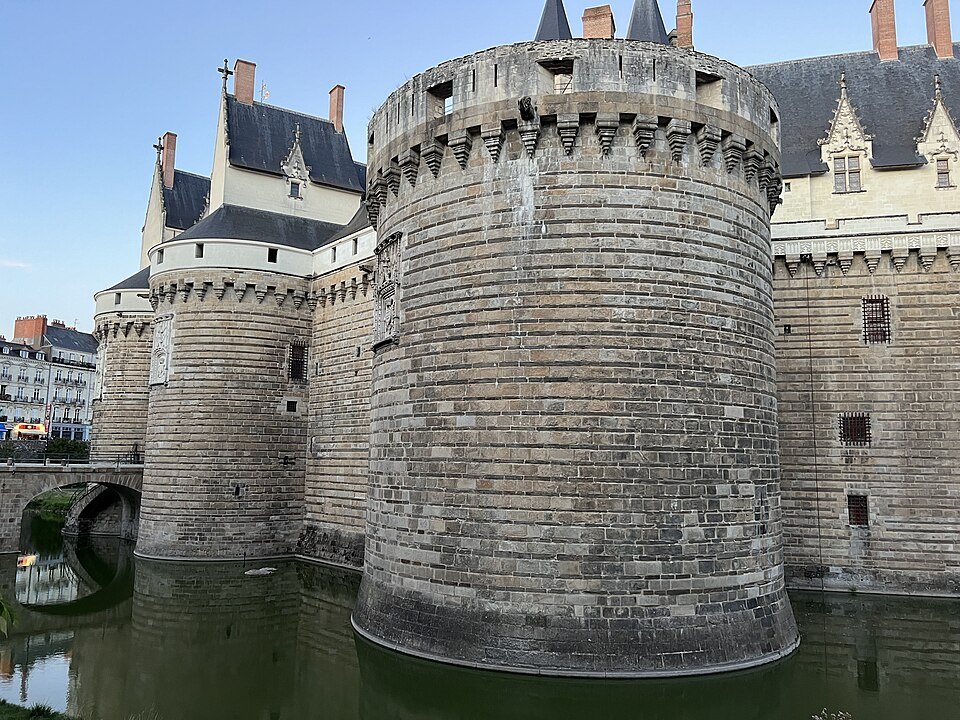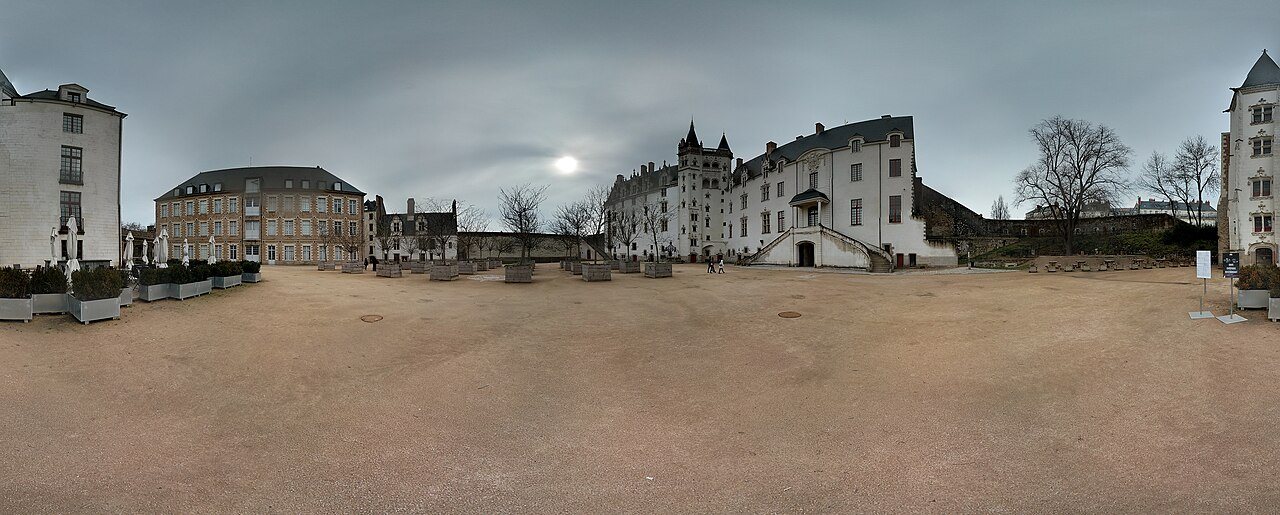
From the street, the Château des ducs de Bretagne looks like exactly the kind of place you need a ticket for. The walls are high, the moat is real (if grassed over and dry), and there's a ticket office right there near the entrance. So people stand at the railing, take a photo of the towers, and walk on toward Bouffay or the cathedral without ever crossing the drawbridge. That's the mistake. The courtyard inside those walls is open to anyone, no ticket required, and it's the best part of the whole complex.
What's actually free and what isn't
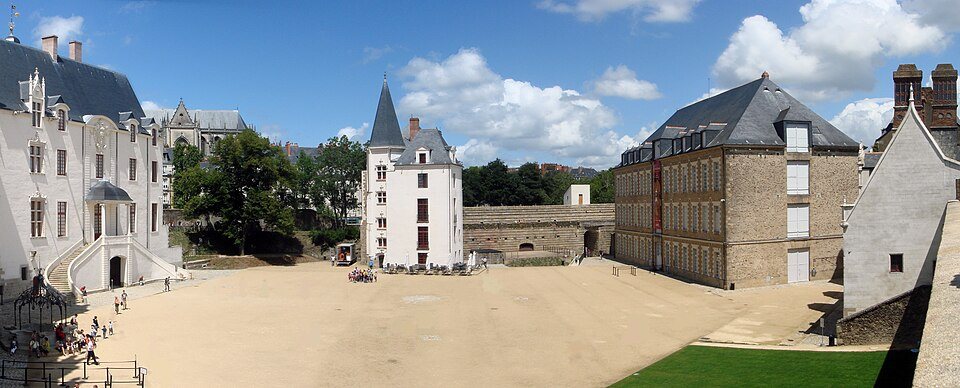
The château is really two experiences stacked on top of each other. One is the Nantes History Museum, which occupies the rooms inside the main buildings and does require a paid ticket — that's the part with the exhibits on the city's shipbuilding, trade, and colonial past. The other is the physical courtyard itself: the cobbled ground between the buildings, the well, the facades of the Grand Logis with its dormer windows, and the view up at the Tour de la Couronne d'Or. You walk in through the same gate everyone uses, and nobody stops you if you're not going to the museum.
The confusion is understandable. The ticket desk sits just inside, so it looks like a checkpoint. It isn't. It's for the museum and, separately, for the guided ramparts circuit. Walking the courtyard, looking at the buildings, sitting on the low walls, and reading the free information panels costs nothing and requires nothing from you at the gate.
Getting past the drawbridge without a ticket
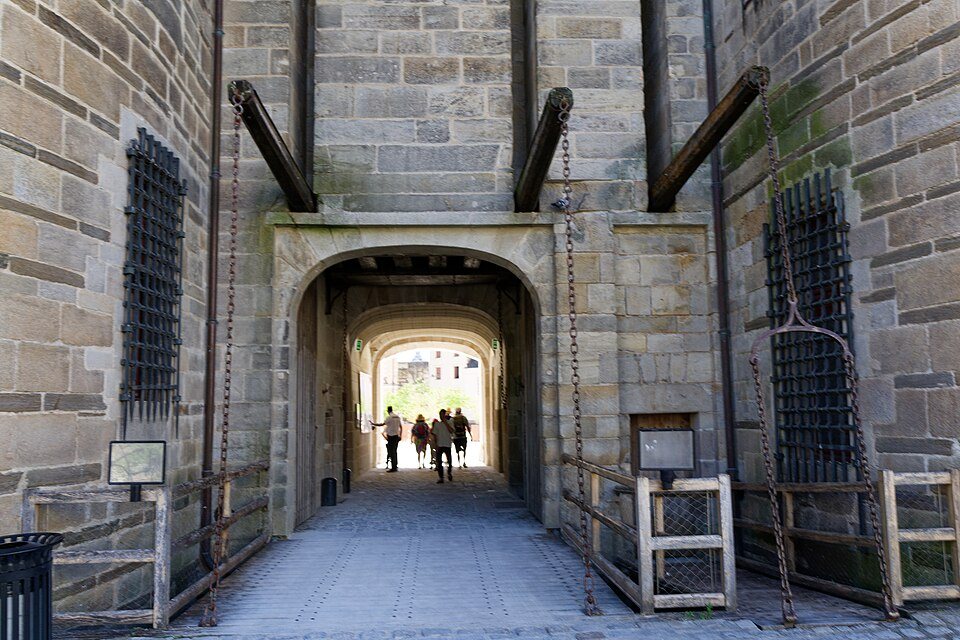
The entrance is on the side facing the city center, across a fixed bridge over the old moat. The gates are open during the day and close in the evening; the operator posts the current schedule at the château itself and online, and it changes with the season, so check before you plan an evening visit — this isn't a place with a fixed year-round routine.
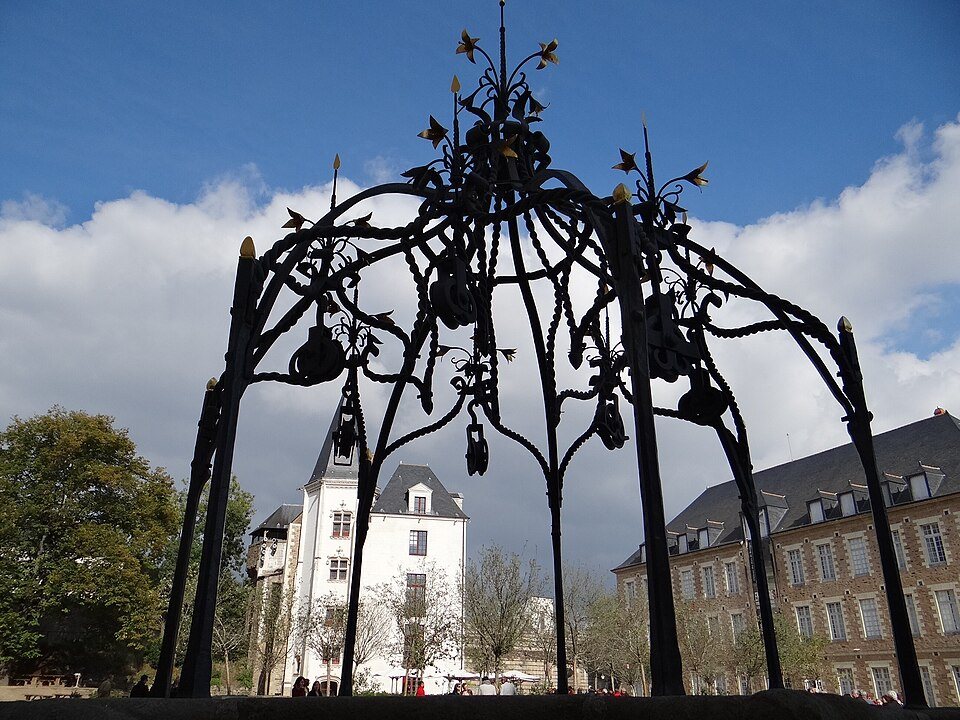
Once inside, the space opens up more than you'd guess from outside. It's not a single square but a series of connected yards, with the Grand Logis on one side (this was the ducal residence, later linked to Anne of Brittany, who was born in the château and remains the figure most associated with it) and older defensive buildings on the other. There's a well in the middle that visitors almost always photograph, a lawn that gets used for actual picnics on warm days, and a bookshop/gift shop near the entrance that's also free to browse.
Go in the late afternoon if you want the courtyard closer to empty. Tour groups tend to move through around midday, and the stone facades catch better light a couple of hours before the gates close.
The ramparts walk, and where the free part ends
This is where people get tripped up a second time. Part of the château's appeal is walking the top of the ramparts — the wall-walk that circles above the moat and gives you a proper look down into the dry moat gardens and out over the rooftops toward Place Royale. Some sections of this walk are included with courtyard access; the full circuit and certain towers are tied to the museum ticket or a separate pass. The dividing line isn't obvious from the ground, and the signage at the access points is the only reliable guide on a given day, since the arrangement has changed over the years. If you only want the free courtyard experience, stick to ground level and you won't accidentally end up needing to pay to get back out — you won't, but you may end up in a queue you didn't intend to join.
Don't assume the moat itself is off-limits. The dry moat around the château has paths and lawns that are open to the public and separate again from both the courtyard and the museum — you can access parts of it from outside the walls entirely, without going through the gate at all. It's a genuinely pleasant, shaded loop that most people walking past on the main road never notice is there.
Why most visitors skip it anyway
Nantes puts a lot of its best-known sights within a few minutes of each other — the château, the cathedral, the Passage Pommeraye, the old town around Bouffay — and visitors on a tight loop tend to treat the château as a photo stop rather than a place to enter. Add the ticket-desk confusion and the fact that the château doesn't announce "the courtyard is free" anywhere obvious, and you get a steady stream of people who circle the outside, take the same shot everyone else takes from the bridge, and move on to Les Machines de l'île or the tram stop.
That's a reasonable choice if you're short on time. But if you're staying in Nantes for more than a single afternoon, the courtyard is worth the five minutes it takes to walk through, even if you have no interest in the museum. It's one of the few spots in the city center where you get medieval and Renaissance stonework at close range, for nothing, without a plan.
The château also works well as a hinge point for a walk rather than a destination in itself. From the courtyard you're a short walk from the cathedral, from the river side of town near Hangar à Bananes, and from the tram lines that get you out toward the Jardin des Plantes or across to Île de Versailles. Treat it as a stop on a longer loop rather than a box to tick, and the free courtyard makes a lot more sense as part of the day.
If you do want the museum, buy that ticket separately and go in with a plan — the collection covers the city's maritime and trading history in more depth than a casual visitor expects, and it deserves an hour rather than twenty minutes squeezed between other stops. But that's a different visit from the one this article is about. The courtyard doesn't ask anything of you. Most people just don't know that until they've already walked past it twice.
In pictures