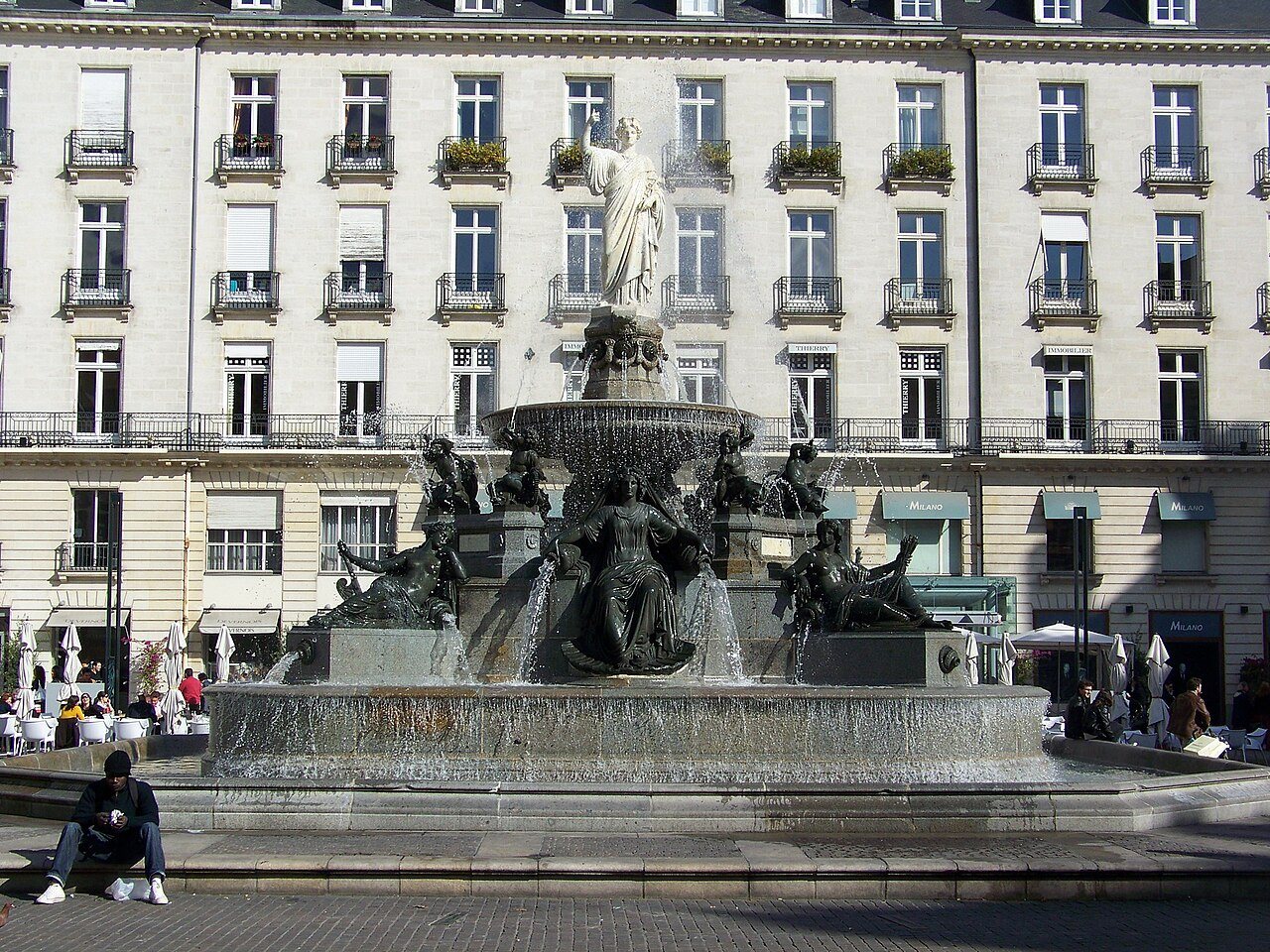
Laid out in the 1790s as Nantes rebuilt itself in pale stone on the profits of the port, it is the point where the shopping streets converge and the place most Nantais would name if you asked where the middle of town is.
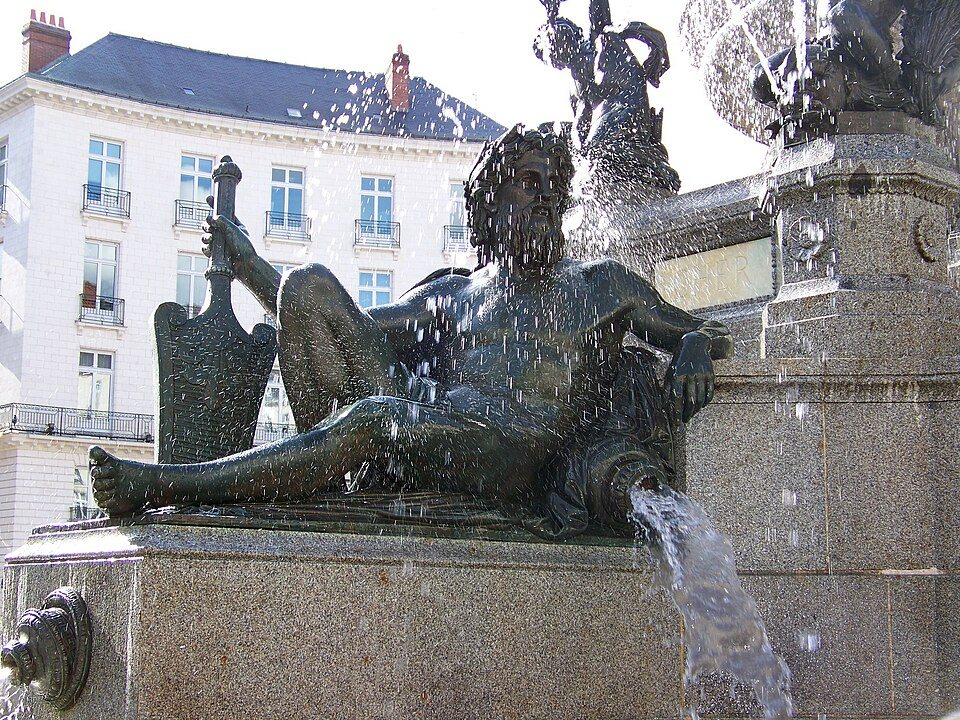
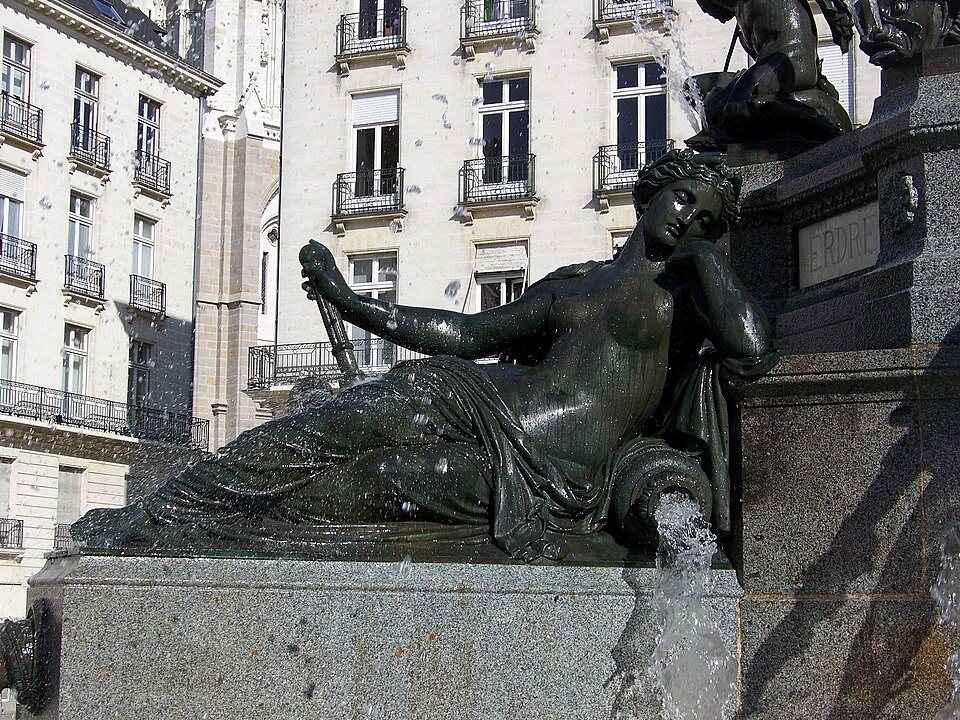
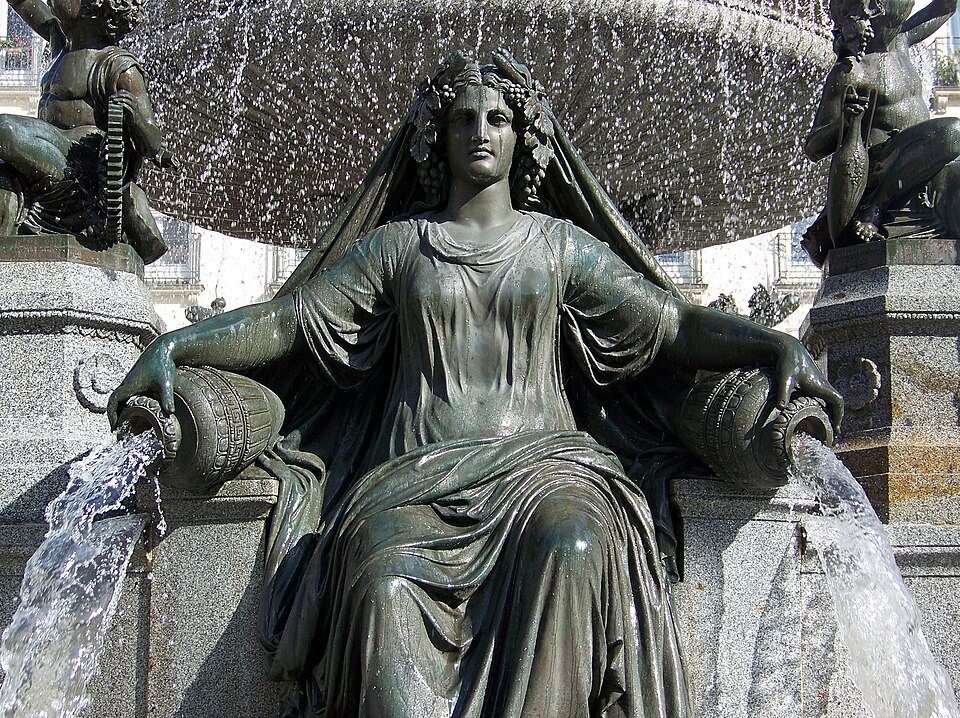
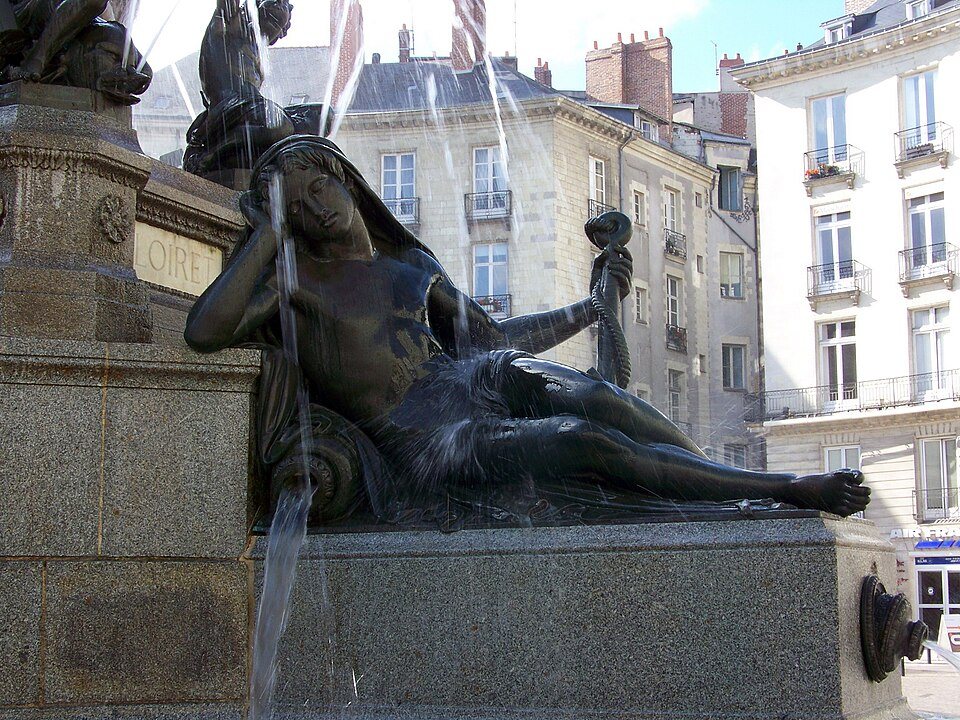
The fountain personifies the city of Nantes above, with the Loire and its tributaries — the Erdre, the Cher, the Sèvre, the Loiret — arranged below her. It is an unusually literal statement of a river city's idea of itself.
The square was destroyed in the 1943 bombing and rebuilt, so what you are looking at is a careful reconstruction of the eighteenth-century design.
Sit on the fountain steps for ten minutes. It is the best place in Nantes to watch the city be ordinary.
Where the walls were
Before 1790 this was a fortified bastion, built around 1500 to guard the Porte Saint-Nicolas in the medieval walls. When the walls came down, the city turned to the architect Mathurin Crucy, who had just succeeded Jean-Baptiste Ceineray, and in 1786 he drew the plan of a new quarter organized around a square. It follows the rules of classical architecture: symmetrical fronts, a rigorous plan and open views. Its shape joins a rectangle on the east to a half-circle on the west, which locals compare to a dressing-table mirror.
The buildings around it were made uniform, four stories high, with a ground floor and mezzanine meant for shops from the start, and two new streets were cut to balance the openings of the rue de la Fosse and the rue de Gorges. Crucy also designed the Place Graslin and linked the two squares by the rue Crébillon, which is why walking between them feels like one composed piece of town.
A city without a fountain
Nantes had wanted a monumental fountain since 1567, when a fountain maker from Tours discussed one with the council before leaving for work at Chenonceau, and at the end of the eighteenth century it still had none. The city architect Henri-Théodore Driollet proposed a cast-iron fountain for the square in 1849, then a flower bed, then a giant lamp with twenty-four lanterns, before teaming up with the sculptor Daniel Ducommun du Locle in 1852 on a fountain with statues. Years of argument followed, over whether the Loire was too undressed and even, from the bishop of Nantes in 1859, over the project as a whole.
The design was fixed in 1861 with the statues in bronze. The blue granite came from Cuguen in Ille-et-Vilaine, and the main basin, weighing about 30 tonnes, was dragged on a sledge by twenty horses and set in place on April 4, 1861. Driollet died in 1863, and the fountain was inaugurated in 1865.
Reading the fountain
Three granite basins rise in a pyramid. At the top, facing the rue Crébillon, the city is a crowned woman holding a trident, the only statue in white marble. Below her the Loire pours water from two amphorae, and her tributaries, two women and two men, recline around her: the Erdre, the Sèvre, the Cher and the Loiret. Eight spirits of industry and commerce, blowing water through shells and riding dolphins that spout from their nostrils, recall the port that made the city rich. The river figures are by Ducommun du Locle, the spirits by Guillaume Grootaërs, and all were cast by the Nantes founder Jean-Simon Voruz, who also made the staircase of the Passage Pommeraye.
Bombed and rebuilt
The bombing of September 16, 1943 ravaged the square and destroyed eight of the nine blocks around it. After the war it was rebuilt to the old design under the chief architect Michel Roux-Spitz, this time in concrete and set slightly back, with larger windows and dormers. In the 2000s the city took the square back from cars and parking, and the fountain, long just a roundabout ornament, was restored in 2007.
The square has always been where Nantes gathers. When the bells announced the armistice on November 11, 1918, a passing cart of hay was used for a bonfire here; strikers filled it in 1936, and it was the stage of May '68 in Nantes. Stendhal, visiting in the 1830s, wrote that he liked the Place Royale very much, vast and regular.
Names and shops
The square changed its name with the regimes. During the Revolution a liberty tree was planted on August 26, 1792, on what was then called the former Place Louis XVI or the Champ de l'Égalité, and on January 17, 1794, a procession passed under a temporary triumphal arch put up here with three statues, one of them Equality.
Crucy had planned for commerce from the start, and well-known names followed. In 1870 a branch of the store À la Grande Maison opened on the north corner with the rue d'Orléans; in 1900 it was replaced by Au Grand Bon Marché, a clothing chain with stores in ten cities around the world.
Sources
Place Royale in pictures