Narrow lanes, timber-framed houses with overhanging upper stories, and the street names of the trades that worked here. Rue des Échevins, Rue de la Juiverie and Rue de la Bâclerie are the ones to walk.
This is the oldest surviving fabric in Nantes. Much of the city was flattened in September 1943 and rebuilt; Bouffay came through, which is why the change of scale between here and the boulevards is so abrupt.
It is now the main eating and drinking quarter, which means it is lively at night and calm in the morning.
Walk it before ten in the morning. The same lanes are a completely different place once the tables come out.
The Roman town
This is where Nantes began. After the Roman conquest in the first century BC the town of Condevincum, the name means confluence, grew up here on about 16 hectares between the Loire and the Erdre, both far wider then than after they were filled in. Between the second and fourth centuries it had around 20,000 inhabitants and a forum near the port, roughly where the Place du Bouffay is now. A brick wall 1,665 meters around enclosed it, with towers and a few gates; the best preserved is the Porte Saint-Pierre, beside the cathedral. The boatmen of the Loire, the nautae ligerici, formed a rich and powerful guild that controlled the river trade.
The vanished castle
The name Bouffay appears at the end of the tenth century, with the castle built by the dukes Conan and Alain Barbetorte, who hastily raised walls after the Vikings sacked the city; nobody has found a satisfying explanation of the word. The castle stood at the south-west corner of the old town near the former meeting of the two rivers. Once the dukes moved to their new castle, the Bouffay became the seat of the town's institutions: a prison from 1467, the seat of the seneschal's court a decade later, and from 1551 a court of justice. During the Revolution it housed the revolutionary tribunal, and at the end of the eighteenth century its prison was also used to detain enslaved Black people whose permission to stay in France had run out. The castle was demolished from 1843, and its clock tower followed in 1848; its belfry now crowns the tower of the nearby church of Sainte-Croix.
One of the castle's darkest stories dates from 1343, when Olivier IV de Clisson was beheaded in Paris for treason on the orders of King Philip VI; according to some writers his head was sent to Nantes and displayed on a lance from the battlements here, and it was from this sight that his widow, Jeanne de Belleville, swore revenge.
The square of executions
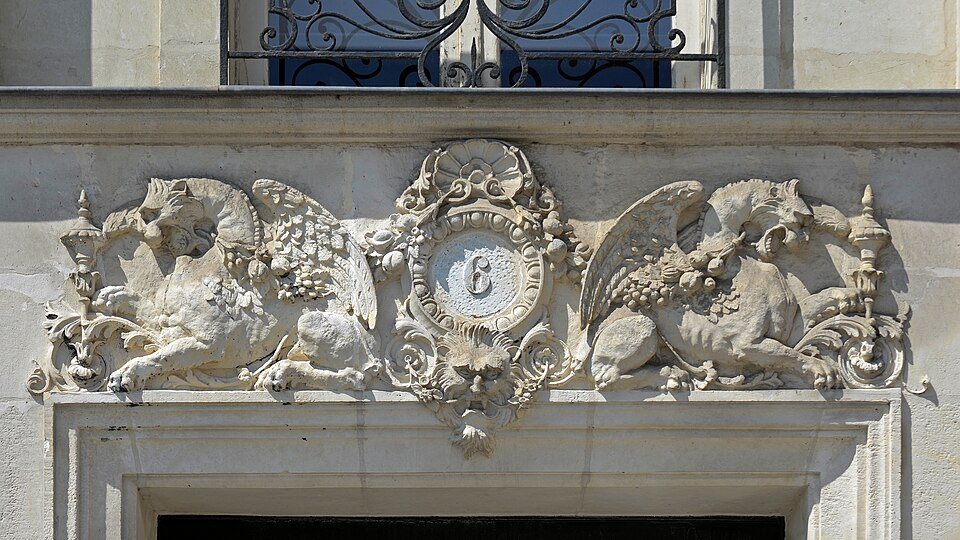
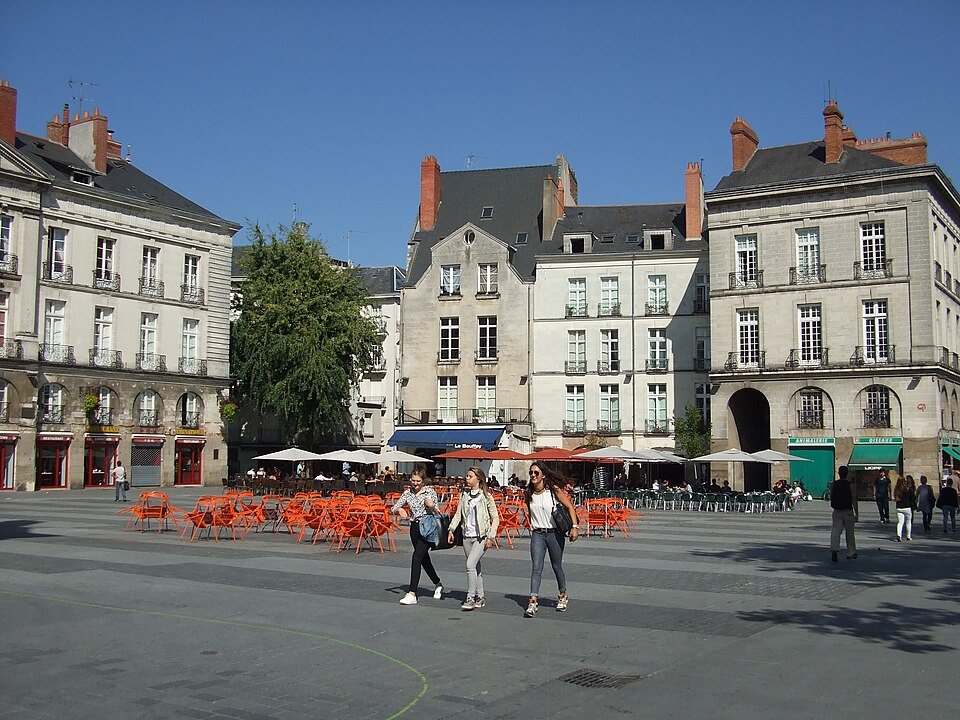
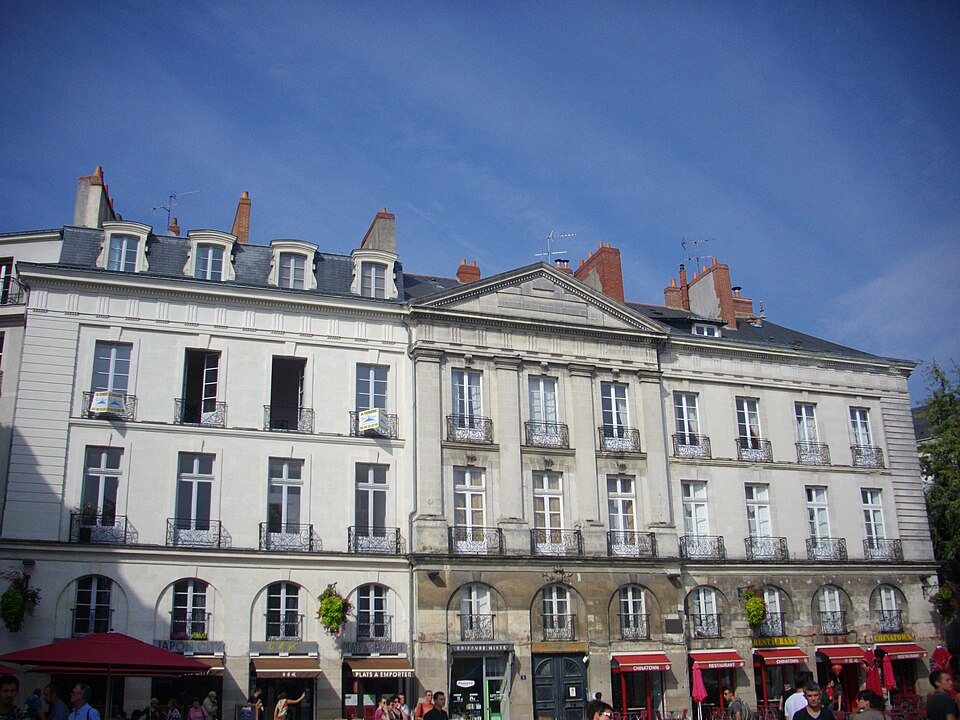
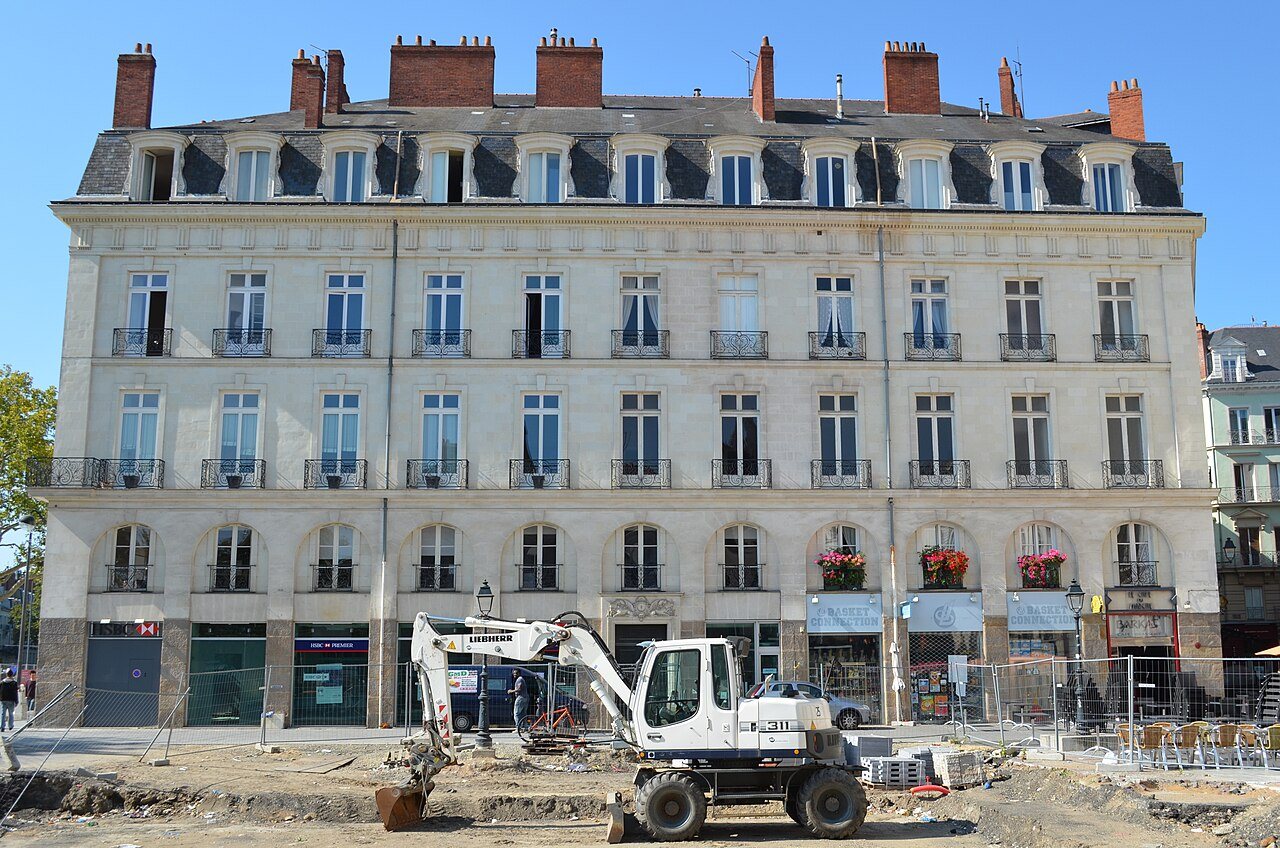
The castle's courtyard became the Place du Bouffay, the main square of medieval Nantes and the place of public executions until the Revolution. Henri de Talleyrand-Périgord, the Count of Chalais, was beheaded here in 1626 for his part in the Chalais conspiracy, as were the leaders of the Breton Pontcallec conspiracy in 1720. The south side was once closed by the medieval wall along the Loire, demolished between 1766 and 1780; the city architect Jean-Baptiste Ceineray drew up the plan that gave the square its classical fronts, now listed monuments. The mint on its south-east corner struck coins until 1820, and the physician René Laennec lived at number 5 from 1788 to 1793.
Reading the streets
The old street names keep the history, the Place du Pilori after the pillory and the rue de la Juiverie after the Jewish quarter, and the lanes are narrow. Look for the few timber-framed houses of the fifteenth century, among them the Maison des Apothicaires, and the town houses of the same period, such as the Hostellerie des Jacobins, the Hôtel de Bruc and the Hôtel Saint-Aignan. The square, paved and pedestrian, appears in Jacques Demy's Une chambre en ville. Tram line 1 stops at Bouffay, and lines 2 and 3 at Commerce, a short walk away.
Christians and a bishop
Christianity reached the Nantes area in the third century, marked by the martyrdom of the brothers Donatien and Rogatien around 288. The first Christian sanctuary was built outside the walls, on their family estate, and only after the Emperor Constantine's edict of toleration in 313 did the first cathedral rise where the present one stands. After the fall of Rome, Bishop Félix governed the city almost alone from 550 to 583 and is remembered as an exceptional administrator, a shrewd diplomat and a great builder.
Until 2010 the Place du Bouffay also held a covered market under metal canopies that had sheltered the traders since 1878, rebuilt identically a century later; they were taken down when the neighboring cours Franklin-Roosevelt was redesigned.
Sources
- Bouffay (Nantes) — Wikipedia (fr)
- Place du Bouffay — Wikipedia (fr)
- Château du Bouffay — Wikipedia (fr)
Quartier Bouffay in pictures