Nantes was a port that traded with the Americas and the Indian Ocean, and captains were once required to bring seeds home. The garden grew out of that, and it still holds serious collections — camellias in particular, the flower Nantes has taken as its emblem.
It is seven hectares of glasshouses, ponds, a magnolia collection and long lawns, immediately beside the main railway station.
Claude Ponti, the children's author, has installed enormous whimsical sculptures through the garden — a giant sleeping child in a flowerbed, a bench that has eaten a tree. They are permanent and they are free.
It is next to the station, so it is the right place to spend a spare hour before a train.
From apothecaries' plot to royal garden
The city's first botanical garden was created in 1687, when the master apothecaries were given a plot on the west side of town, in the Marchix district where the Tour Bretagne now stands. In 1719 it became a royal garden of plants, answerable to the King's Garden in Paris, and on September 9, 1726, Louis XV issued an ordinance obliging the captains of Nantes ships to bring back seeds and plants from the colonies and foreign countries for the city's garden of medicinal plants. It worked so well that the old garden was soon too small.
The present site, east of the old town beside a former Ursuline convent, was chosen after a decree of 1793 called for a botanical garden in every department. Its first director, the apothecary and botanist Jean Alexandre Hectot, planted a great Magnolia grandiflora there in 1809; a magnolia planted in the same spot is today the oldest tree in the garden. In 1820 Louis XVIII handed the garden to the city, which set out to open it to the public.
Écorchard's garden
The garden you walk through owes most to Jean-Marie Écorchard, a 26-year-old doctor appointed to the city's new chair of botany in 1836, who found it more a nursery than a scientific establishment and ran it for more than forty years. He fought for a hot greenhouse, built in 1844, and, impressed by Kew and the national botanic garden of Belgium, redesigned it as an English-style park. Ships' captains still fed it: the merchant captain Mathurin Jean Armange, sailing to Martinique, Réunion and India, brought back thousands of seeds and plants between 1841 and 1863.
Écorchard died suddenly in 1882, and a decade of neglect followed until Paul Marmy was appointed in 1893 to restore order. By 1910 the director Paul-Émile Citerne counted 2,226 species in cultivation. From 1951 Paul Plantiveau turned the planting department into the city's green spaces service, and the garden became more horticultural than scientific: Écorchard's roses gave way to the great camellia collection. It still does scientific work, conserving the flora of Brittany alongside exotic plants such as a collection of high-altitude plants from Bolivia, keeping herbaria open for consultation and publishing a seed list for exchange with other botanic gardens.
What to look for
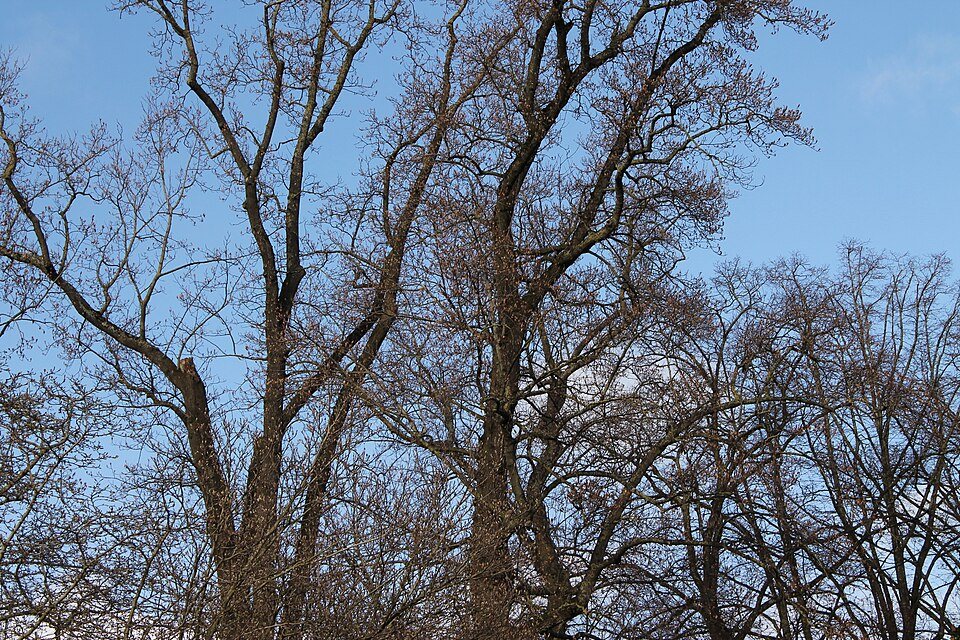
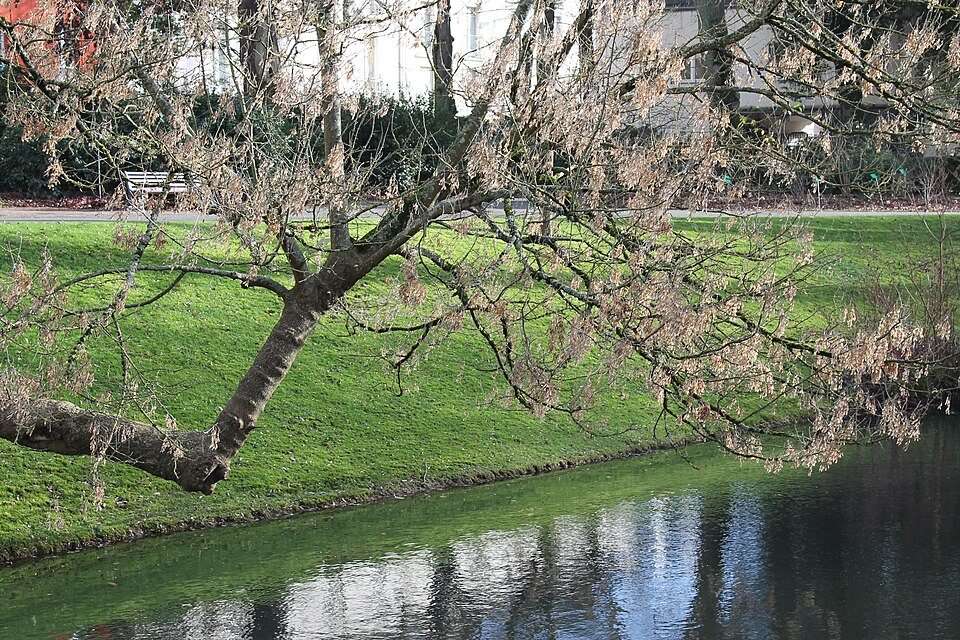
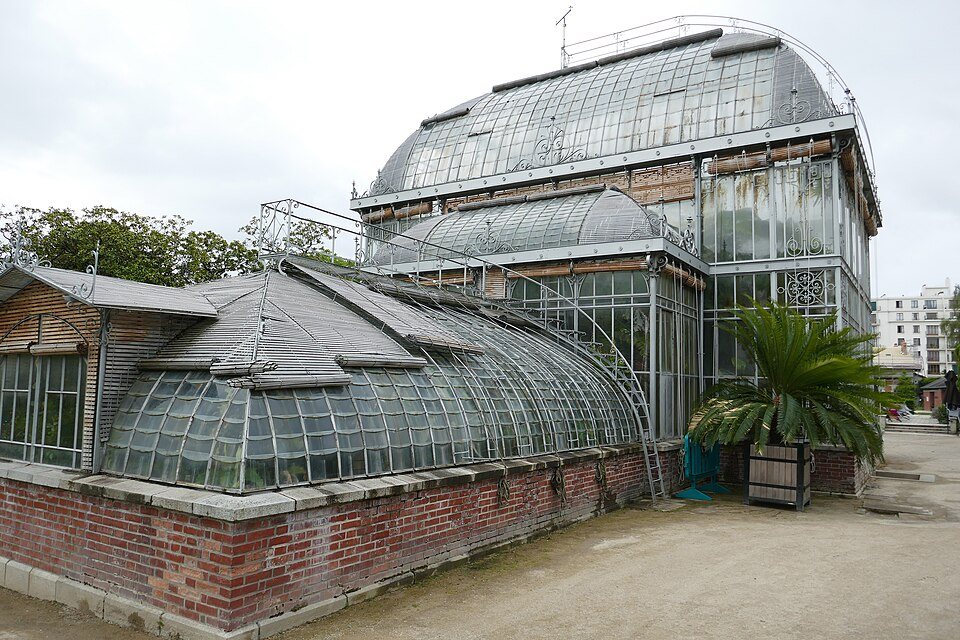
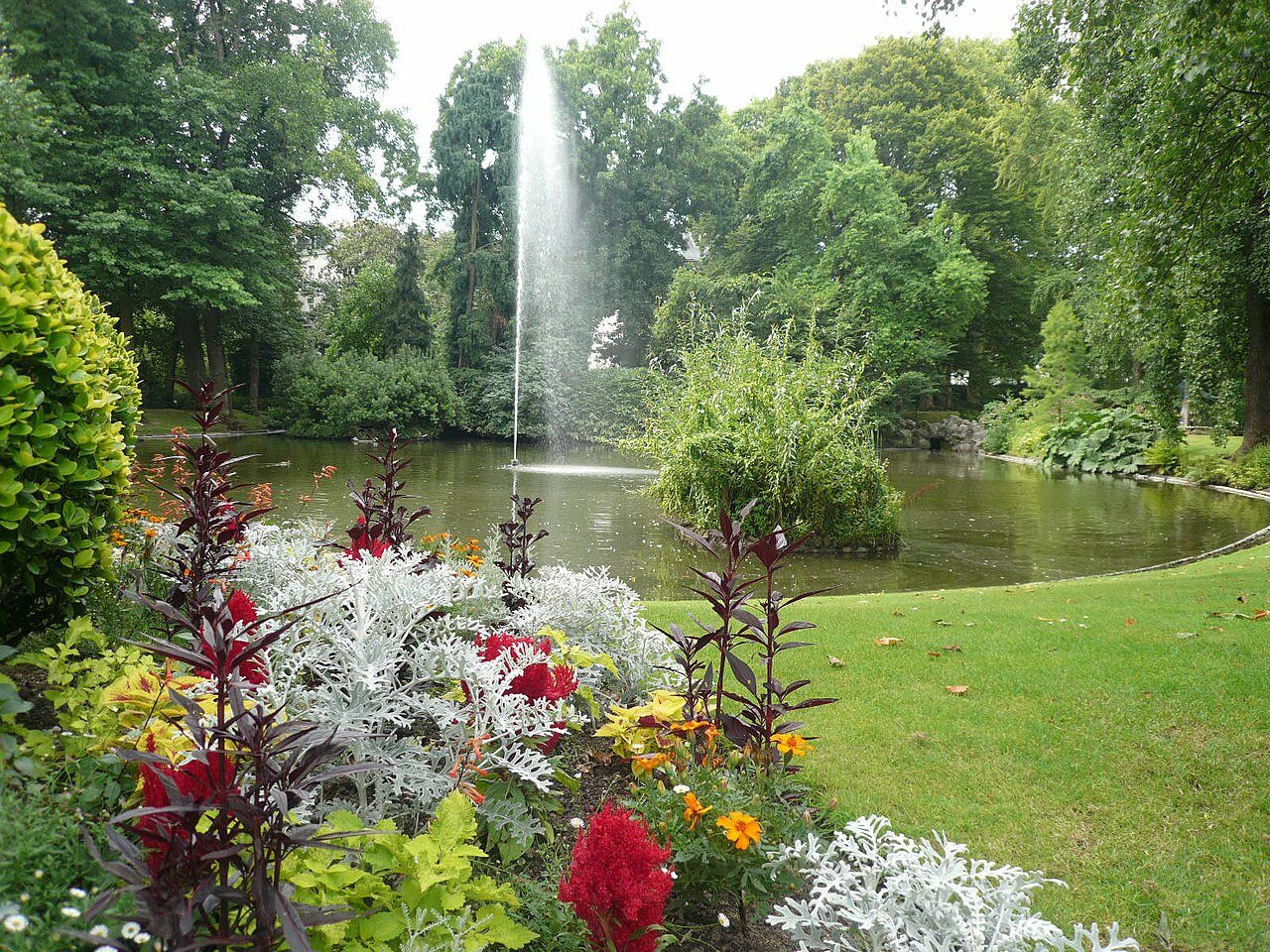
The garden covers just over seven hectares and is listed as a Jardin remarquable. It is laid out as an English-style park with ponds, fountains, a cascade, bridges, pavilions and sculptures, and it doubles as an arboretum. The collections include 650 varieties of camellia, a cactus and succulent house, and the Palmarium, a glasshouse built in 1898 that shelters epiphytes, plants that grow on other plants. The botany school displays the flora of the Armorican Massif, the old rocks of Brittany and western France. In season some 65,000 plants go into the flower beds, and the trial garden shows the public the plants chosen each year for the city's flower beds.
Statues with a past
Several of the sculptures carry the scars of the Second World War. The bronze deer group by Georges Gardet, a stag, a doe and a fawn from 1908, had its legs sawn off for the metal; the doe was never found, and the restored fawn, back on its plinth since 1994, is known locally as the orphan fawn. The bronze bust of Jules Verne on his monument, unveiled in 1910, was melted down under Vichy and replaced in 1945 by a stone one. Of Charles Valton's bronze Barbary sheep, sent in 1908, only the rock they stood on remains. Look too for Camille Alaphilippe's stoneware group of 1906, a mother showing her child their reflection in a pond, and for two of the city's five Wallace drinking fountains.
The garden's five entrances include the Porte des Camélias, the main gate opposite the station, and its Pollinier, running since 2003, tracks the pollen of some twenty local species every day to help people with allergies.
Sources
Jardin des Plantes in pictures