Nantes likes to describe itself as a city built where two rivers meet, but one of those rivers is only partly visible today. The Erdre, which used to flow openly into the Loire through the heart of the old town, now spends its last stretch underground, boxed into a culvert beneath a street you've probably already walked without noticing. Knowing where to look turns an ordinary stroll through the center into something closer to reading the city's plumbing.
Why a whole river went missing
Nantes grew up on marshy, braided ground where the Loire split into channels around islands, and the Erdre added its own tangle of waterways before joining the main river. As the city industrialized through the 1800s and into the early 1900s, those channels were increasingly in the way: they silted up, they smelled, they flooded, and they blocked the kind of straight, buildable streets a growing port city wanted. Piece by piece, branches of both rivers were filled in or covered over. The Erdre's final run toward the Loire was one of the casualties, closed in and paved across to make room for a wide boulevard.
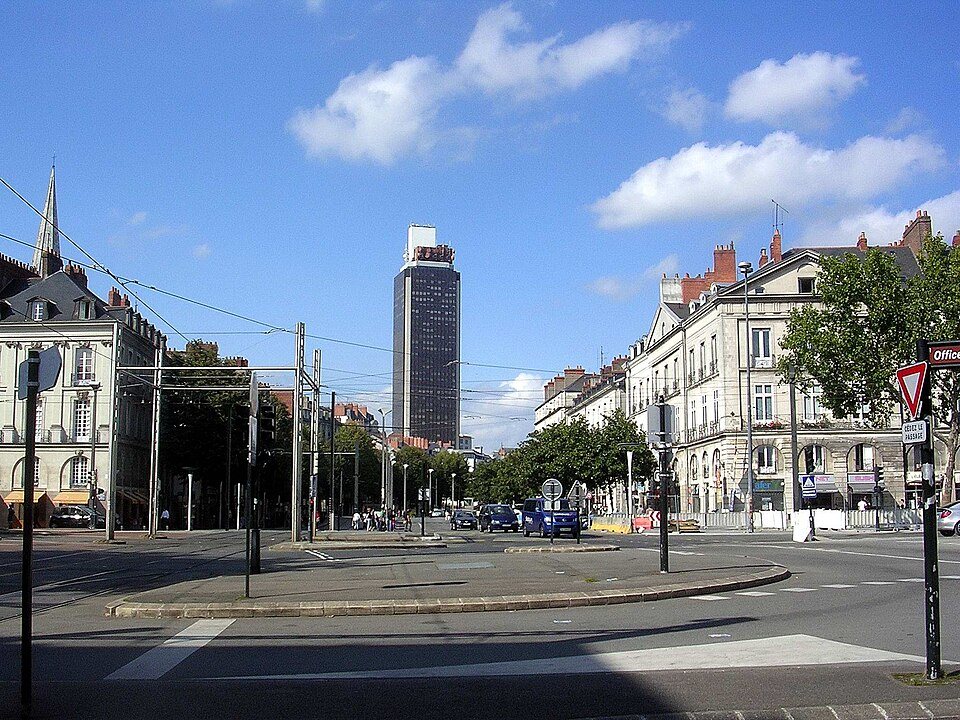
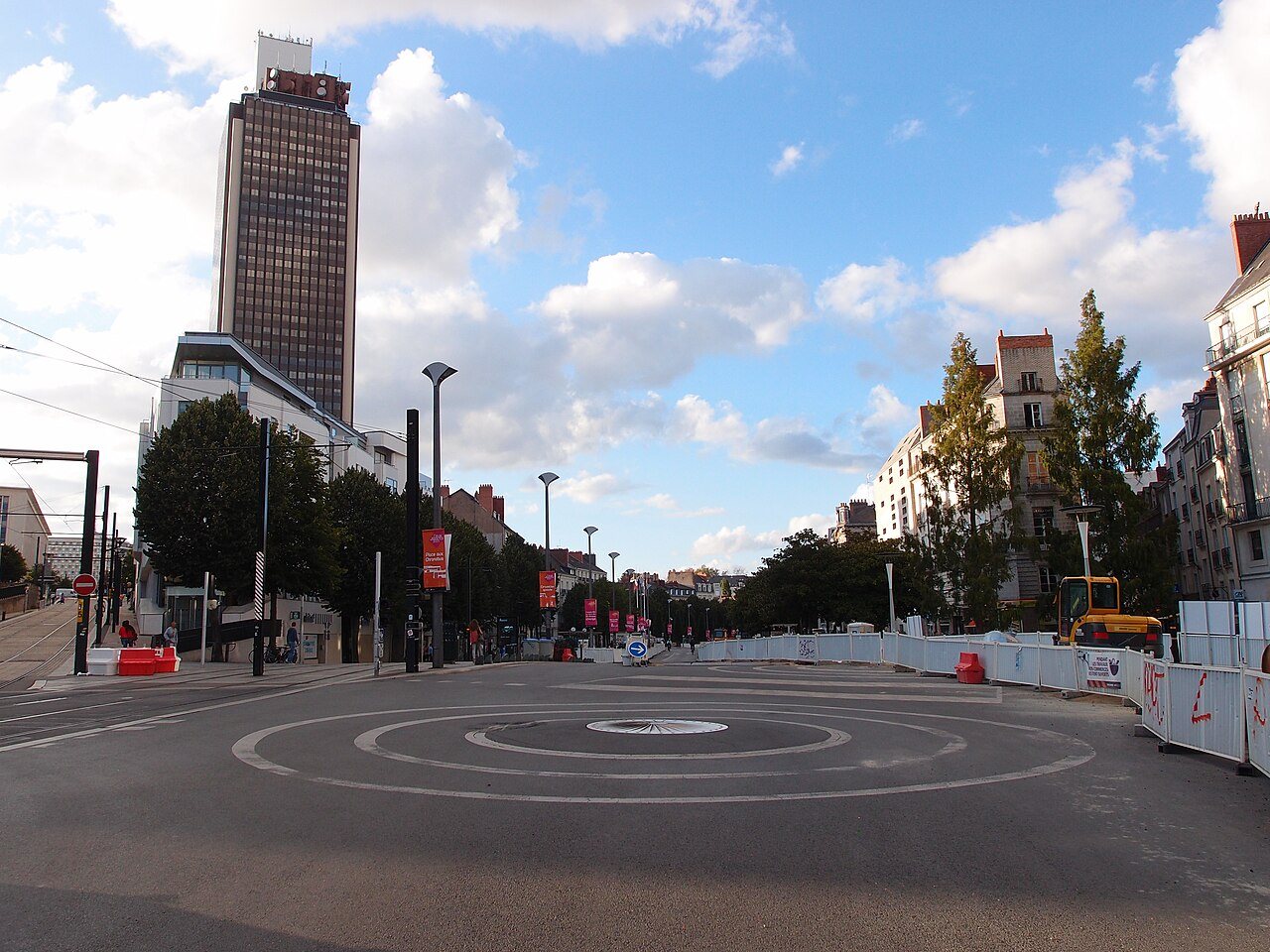
That boulevard is the Cours des 50 Otages, the broad, tree-lined avenue that cuts through the center between the Château and the Place du Commerce area. It doesn't look like a riverbed. It looks like a normal, slightly oversized Nantes street with a tramway line running down the middle and cafés along the sides. That's the trick: the river is still down there, carried through a culvert beneath the pavement, and the street's unusual width and its gentle curve are really just the river's old banks, built over rather than erased.
Reading the buried course on foot
Once you know the Cours des 50 Otages marks the Erdre's hidden path, a few details start to make sense. The street is noticeably wider than the ordinary commercial roads around it, because it had to swallow an entire river channel plus its banks. It also isn't perfectly straight, it bends gently in a way that regular grid planning wouldn't produce on its own, following the old water's natural line rather than a surveyor's ruler. If you walk from the Château end down toward the Place du Commerce, you're essentially walking downstream along a river you can't see.
The Château itself is a useful anchor for this walk, since its moat was fed by river water and its position at the edge of the old waterways was deliberate, not scenic. From there, following the Cours toward the Place du Commerce brings you close to where the Erdre historically emptied into the Loire, in a zone that's since been reshaped again by later landfill and tramway work. Don't expect a plaque explaining all this step by step; the pleasure here is closer to detective work than to reading a museum label, so bring your own curiosity and a decent city map rather than expecting signage to do the job.
For a wider sense of how thoroughly Nantes rearranged its water over the past two centuries, it's worth pairing this walk with a look at the old Quai de la Fosse area, where the Loire's own former channels and filled-in arms tell a similar story on a larger scale. The rivers of Nantes didn't just flow through the city; the city was repeatedly rebuilt around them, and the Erdre's disappearance under the Cours des 50 Otages is the most complete single example of that process.
Where the Erdre comes back into the open
None of this means the Erdre has vanished for good. Head north from the center and the river resurfaces as one of the more pleasant stretches of water in the city, wide, slow-moving, and lined with villas, boat clubs, and towpaths rather than culverts. This open section is what most visitors picture when they hear the river's name, and it's worth treating as a separate outing from the buried-channel walk downtown. The Île de Versailles, a small Japanese-style garden island set right in the Erdre, is one of the easiest places to reach this open water on foot and get a sense of what the river looked like before the city's southern stretch of it disappeared.
Several operators run boat trips along the Erdre from docks near the center, a straightforward way to see the river's open banks without committing to a long walk. Schedules, routes, and boarding points change with the season, so check directly with the boat companies operating from the Nantes docks rather than relying on a fixed itinerary here. The same goes for guided walks that trace the river's old course through downtown: a few operators build exactly this kind of hidden-river tour into their programs, and checking current listings is more reliable than assuming a particular route runs on a particular day.
A short itinerary worth trying
- Start at the Château moat and notice how directly it ties into the old river system rather than being a purely defensive add-on.
- Walk the Cours des 50 Otages toward the Place du Commerce, paying attention to the street's width and its slight curve as evidence of the channel underneath.
- Take the tram or walk north to the Île de Versailles to see the Erdre running in the open, with boats, gardens, and quiet paths replacing the traffic of the buried section downtown.
- If you have time, continue further along the open river on foot or by boat to get a sense of how much of the Erdre survived intact compared to what got built over.
This isn't a long itinerary, and it doesn't require tickets or timed entry to any single site, which makes it an easy half-day to slot in alongside the bigger draws like the Château or the Passage Pommeraye. What it asks for instead is attention: a willingness to look at an ordinary boulevard and recognize it as a river in disguise. For getting between the buried stretch downtown and the open water further north, the tramway network covers both ends of the walk comfortably, so you don't need a car or a long hike to link the two halves of the Erdre's story together.
In pictures