Quai de la Fosse runs along the north bank of the Loire, and for anyone trying to understand how Nantes became rich in the eighteenth century, it is the single most useful street to walk slowly. The river used to come right up to these buildings before the quays were widened and the docks moved downstream. The houses that line it were built by the merchants who financed and organized long-distance shipping, including the trade in enslaved people, and the facades still carry the evidence if you know where to look.
What a shipowner's house looks like from the street
These are not palaces. They are tall, narrow town houses, four or five stories, built shoulder to shoulder in dressed stone, with a plainness that can be easy to walk past without noticing. Look for a few recurring details as you go along the quay:
- Wrought-iron balconies on the first floor, often the only decorative flourish on an otherwise sober front. Some retain their original ironwork; others have been replaced in a simpler pattern.
- Carved ship motifs or maritime symbols worked into door lintels or keystones above windows, a way for the owner to advertise, discreetly, what paid for the house.
- Wide carriage doors at street level, tall enough for loaded carts, which led through to a courtyard where goods were unloaded and stored before being moved to warehouses closer to the water.
- Attic openings and pulley beams near the roofline, used for hoisting sacks and barrels straight up from the street, a detail that tells you the upper floors were as much storage as living space.
None of this is explained on the buildings themselves. Most are private residences or offices now, and there is no plaque-by-plaque tour. The way to read the street is to walk it end to end, once toward the cathedral and once back toward the château, and let the repetition of the pattern register: house after house built on the same commercial logic.
Why this particular street
Quai de la Fosse sat at the point where the Loire was deep enough for oceangoing ships before the river was later dredged and reshaped further downstream. Shipowners needed to live close to where their vessels loaded and unloaded, close to the brokers, insurers, and chandlers who made a voyage possible, and close enough to the water to watch a ship come in. That practical need is why the street reads the way it does: a continuous wall of merchant houses rather than a scattering of grand mansions elsewhere in the city.
Nantes was the leading French port for the slave trade across the eighteenth century, a role it shared with a handful of other Atlantic ports rather than holding alone, and the fortunes built on that trade paid for a great deal of what still stands in this part of the city, including buildings you will see elsewhere in the historic center. Quai de la Fosse is where that money and that history are most physically concentrated in one uninterrupted stretch of street, which is part of why local tour groups and school groups gather here rather than at any single museum stop.
Where to take the history further
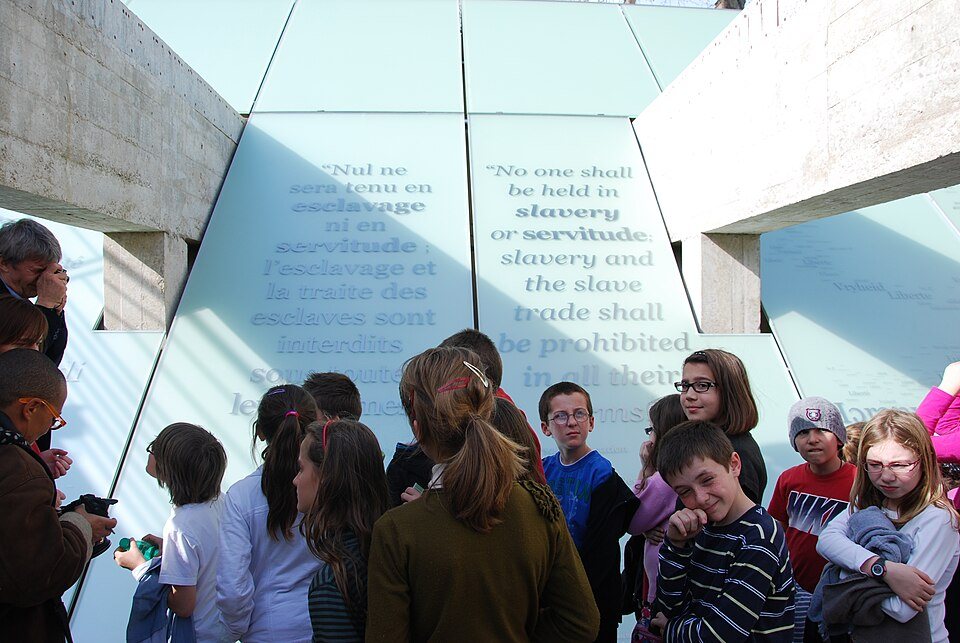
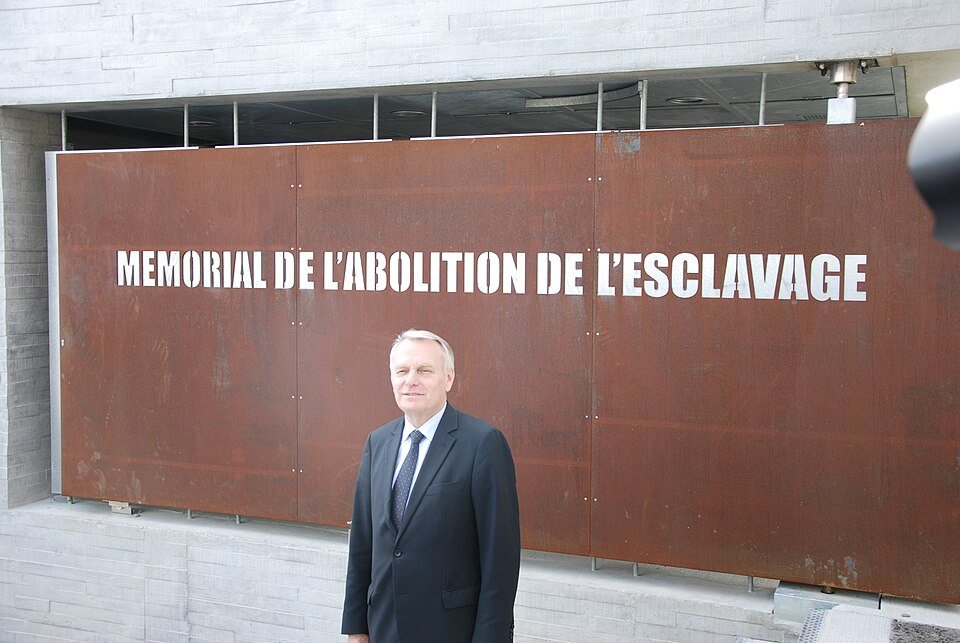
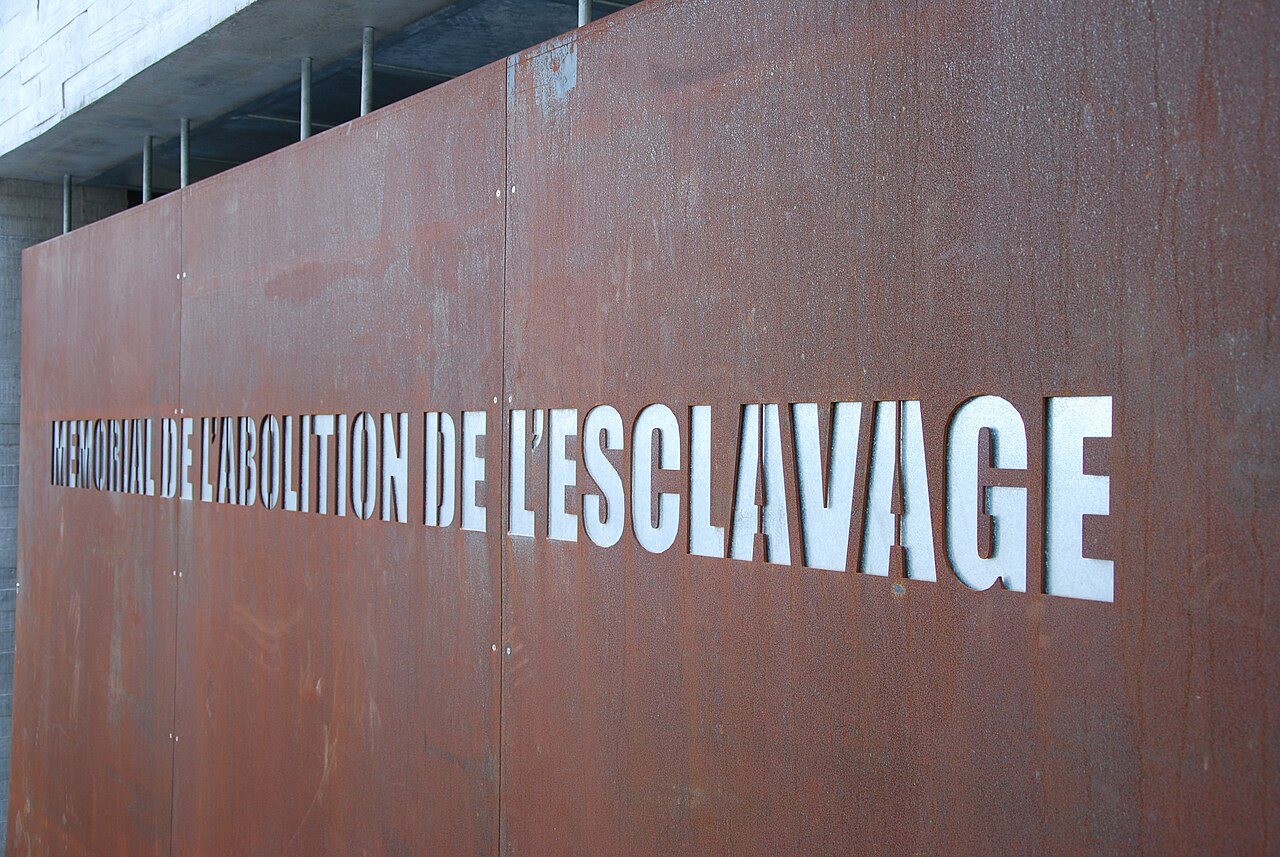
The quay itself gives you architecture and inference, not narrative. For the fuller account, the Mémorial de l'abolition de l'esclavage sits a short walk away along the river, built partly underground into the quay, and is the place designed specifically to lay out this history rather than leave you to read it off a facade. It rewards going there separately, ideally after you have already walked the shipowners' street, because the two experiences work in opposite directions: one shows you wealth without explanation, the other explains without showing you the wealth.
Further along the river, the Hangar à Bananes marks a completely different era of the port, twentieth-century rather than eighteenth, and is worth knowing about mainly so you don't confuse the two waterfronts: one is banking and merchant houses, the other is dockworkers and fruit boats a century and a half later. If you're building a longer walk along the water, the general shape of the river itself and how the port moved downstream over time helps explain why Quai de la Fosse looks the way it does today, quiet and residential, rather than like a working dock.
The Musée Jules Verne, up on the hill above the quay, is a useful detour for a different reason: Verne grew up in Nantes with this same waterfront as his childhood view, and the house-museum devoted to him sits high enough to give you a wide look back down over the roofs of Quai de la Fosse, which is a genuinely good way to see the street's scale and repetition from above rather than at ground level.
The walk itself
Quai de la Fosse is long, and the most legible stretch runs roughly between the area near the cathedral end and the point where the quay starts to curve toward the newer port developments. There is no single best direction; going west to east puts the château and old town behind you and the memorial ahead, which suits people who want to end at the more explanatory stop. Going the other way suits people who prefer to walk from history explained toward history left silent, and to sit with the facades as the last thing they see.
Trams and buses run along or near the quay, so you don't have to walk the whole length in one go if the weather or your feet object; check current routes and stops through the city's transit information rather than assuming a fixed line, since routes here have shifted over the years. If you're combining this with other river-facing sights, it fits naturally into a longer half-day itinerary that also takes in the memorial and the lower stretch of the port; see itineraries for how to sequence it with the rest of a day near the water. For general orientation on the district beyond this one street, neighborhoods covers how Quai de la Fosse connects to the rest of the old port area and where it sits relative to the city center.
What you're ultimately looking for on this walk is not a single standout building but the sameness of many: the same iron balconies, the same discreet carvings, repeated house after house, block after block, because an entire commercial class built to the same brief at the same moment. That repetition is the argument the street makes, and it doesn't need a plaque to make it.
In pictures