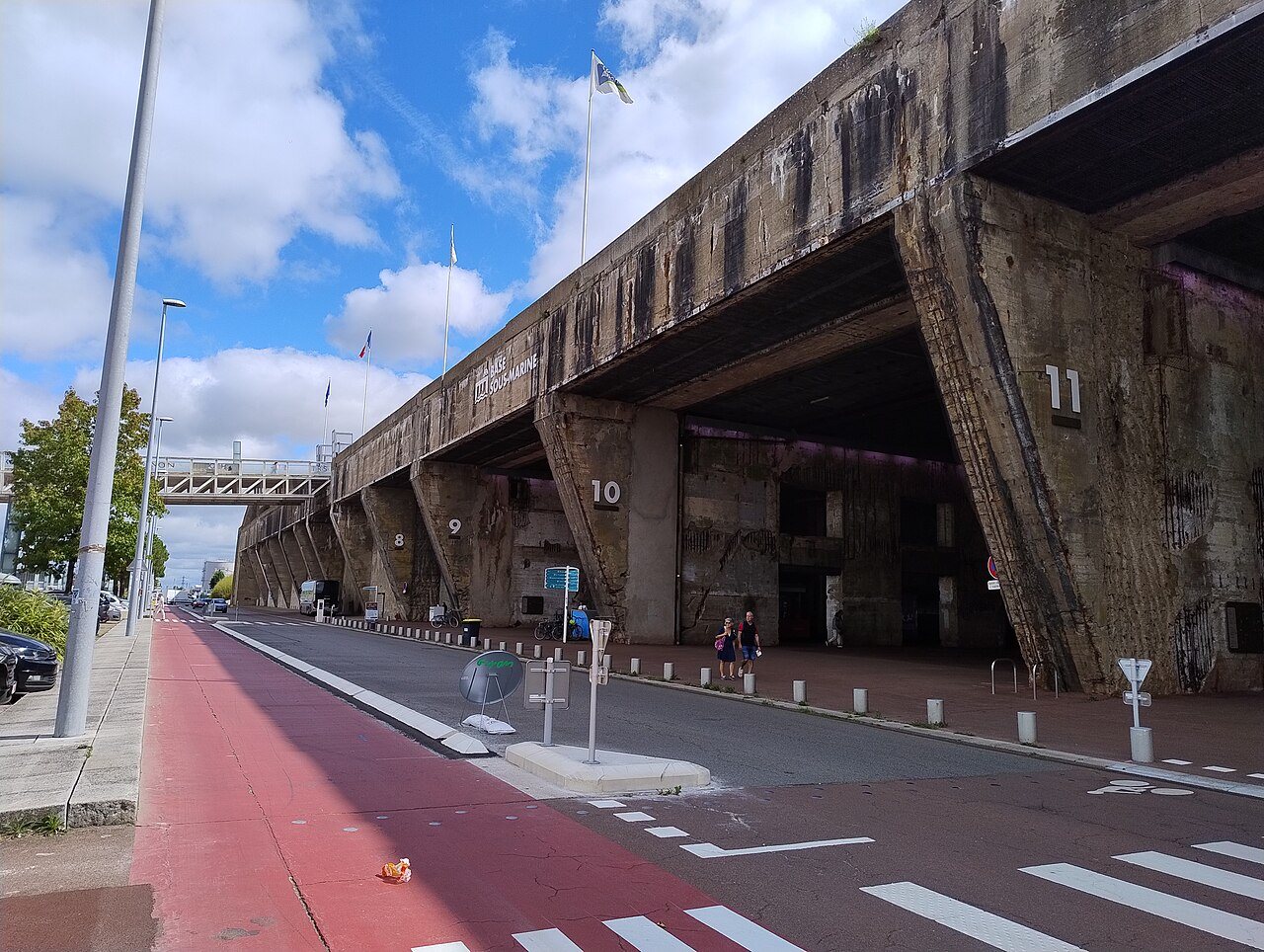
An hour down the Loire from Nantes, at the point where the river widens into the Atlantic, sits a concrete block the size of several city streets. It has no windows, no ornament, and walls thick enough that decades of attempts to get rid of it have mostly failed. This is the submarine base the German navy built at Saint-Nazaire during the Second World War, and it is one of the strangest, most sobering day trips within reach of Nantes.
A fortress built to outlast the war
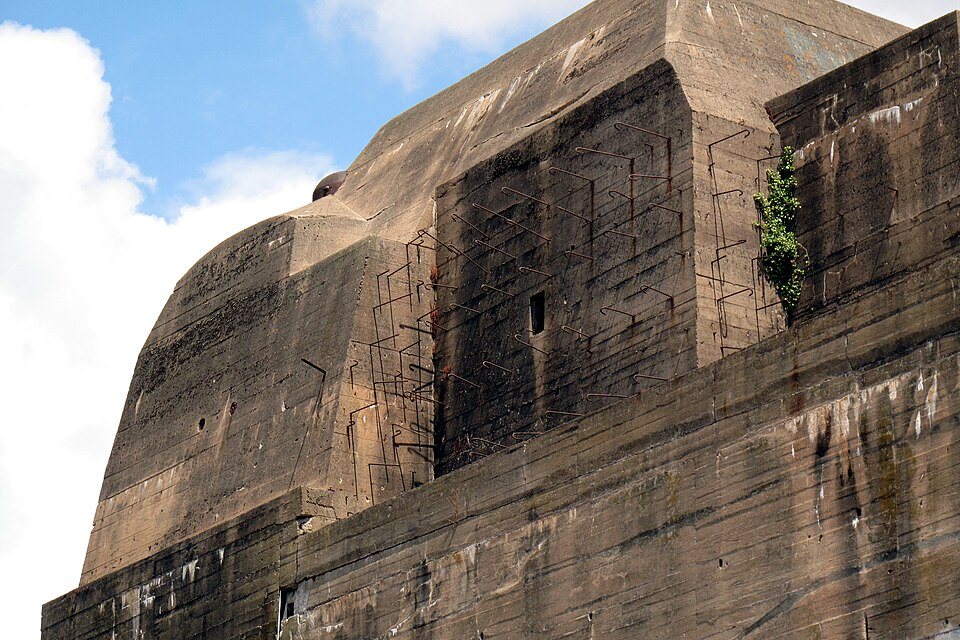
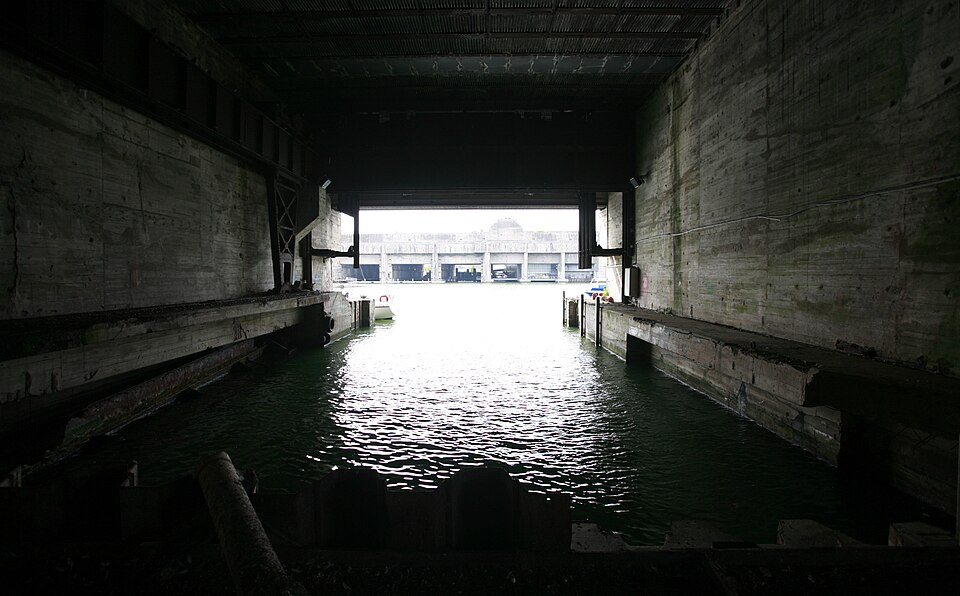
Germany occupied Saint-Nazaire in 1940 because of what was already there: a deep natural harbor and the shipyards capable of building the largest vessels afloat. Submarine crews needed a place to dock and repair their U-boats away from the open sky, so the occupying forces poured a roof of reinforced concrete over a row of docking pens, thick enough to shrug off the bombs of the period. Allied air forces tried anyway, repeatedly, through the early 1940s. The roof held. What did not hold was the town around it.
Saint-Nazaire paid for its usefulness to the German navy. Bombing raids aimed at the base instead flattened most of the surrounding city, and the rebuilding afterward gave Saint-Nazaire the blunt, functional postwar look it still has today — a stark contrast to Nantes, which came through the war with its old center largely intact. Visitors who come expecting a pretty Breton port are often thrown by this: the base survived precisely because everything around it did not.
What the base holds now
The structure is too large and too solid to demolish economically, so the town has spent the decades since finding uses for it instead of fighting it. Parts of the base now house exhibition space, including displays built around the great transatlantic liners that once sailed from this stretch of coast — a subject with real local weight, since Saint-Nazaire's shipyards built ocean liners long before the war and still build cruise ships today. Other sections of the complex are used for contemporary art and design shows that lean into the base's bunker atmosphere rather than disguising it.
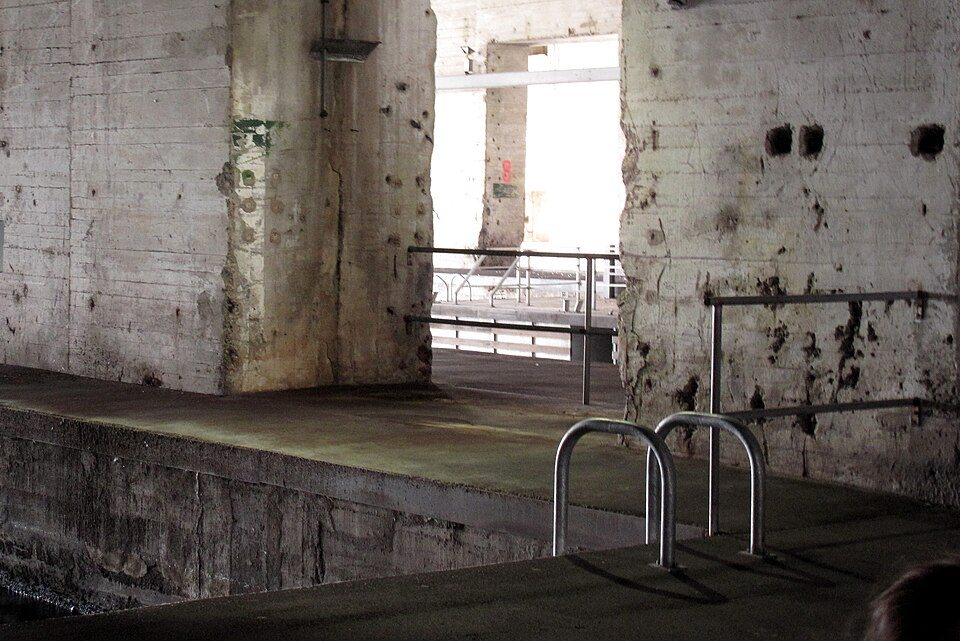
Walking the length of the pens is the part people remember: the scale is disorienting at ground level in a way photographs do not capture, and the roof is best appreciated from outside, where its thickness is actually visible. A retired submarine moored nearby can usually be visited separately and gives a sense of the vessels this whole structure was built to shelter. Check current access and any guided-visit arrangements directly with the Saint-Nazaire tourist office or the base's own visitor information before you go, since different sections of the complex operate on their own schedules.
The rest of Saint-Nazaire, briefly
Few people make the trip from Nantes for the base alone. The shipyards next door, Chantiers de l'Atlantique, still build some of the largest cruise ships in the world, and the submarine base's rooftop and nearby viewpoints along the harbor give a decent look at the yards in operation, cranes and hulls included. The bridge spanning the Loire estuary just outside town is itself worth a look if you have a car — a long, high crossing with open views over the river mouth toward the ocean. Saint-Nazaire's beachfront, on the ocean side rather than the river side, has the kind of wide sand and seaside architecture that surprises people who only know the town as an industrial port; it borrows the same stretch of coast as the resort town of La Baule just beyond it.
None of this amounts to a second Nantes. Saint-Nazaire is a working port city with a complicated history, not a place styled for tourists, and it shows: the center is practical rather than charming, built to serve shipyard workers rather than visitors. That plainness is part of what makes the submarine base land as hard as it does — there is no pretty old town to soften the contrast between what the Germans built to last and what the war did to everything else.
Getting there and making a day of it
Trains run regularly from Nantes to Saint-Nazaire, and the base is a walk from the station rather than a taxi ride, which makes this one of the more straightforward day trips covered on this site's broader day-trips pages. Driving works too, especially if you want to continue on to the bridge or the beaches afterward, but parking near the base itself can be tight on weekends when the shipyards or exhibitions draw crowds. For a sense of how this trip compares with other options outside the city, the general itineraries guide and the getting-around page cover regional trains and timing strategy in more detail.
Budget most of a day if you want to see both the base and the harbor properly, less if the exhibitions inside aren't your priority and you mainly want to walk the exterior and look at the shipyards. Travelers who have already spent time along the Loire in Nantes itself — the docks, warehouses, and industrial leftovers covered on the the-river and quai-de-la-fosse pages — will recognize the same port-city logic playing out at a rawer scale in Saint-Nazaire, where the industry never really left and the war never really got cleaned up, just built around.
Pair the base with the submarine moored nearby if it is open when you visit, and leave time to walk at least part of the harborfront rather than driving straight past it. The base photographs as a single flat wall from a distance; it only reads as what it actually is — a structure designed to survive an air war — once you are standing close enough to see how little the concrete has worn.
In pictures