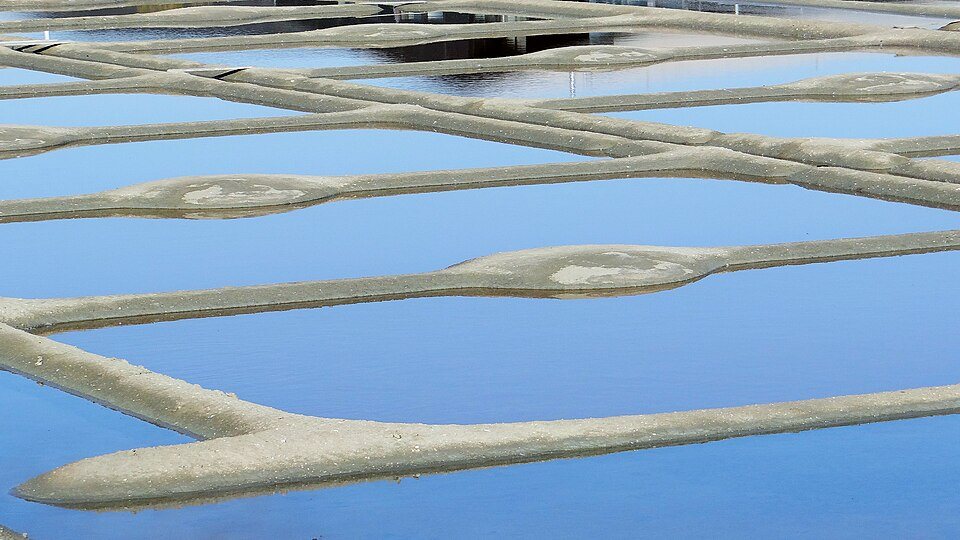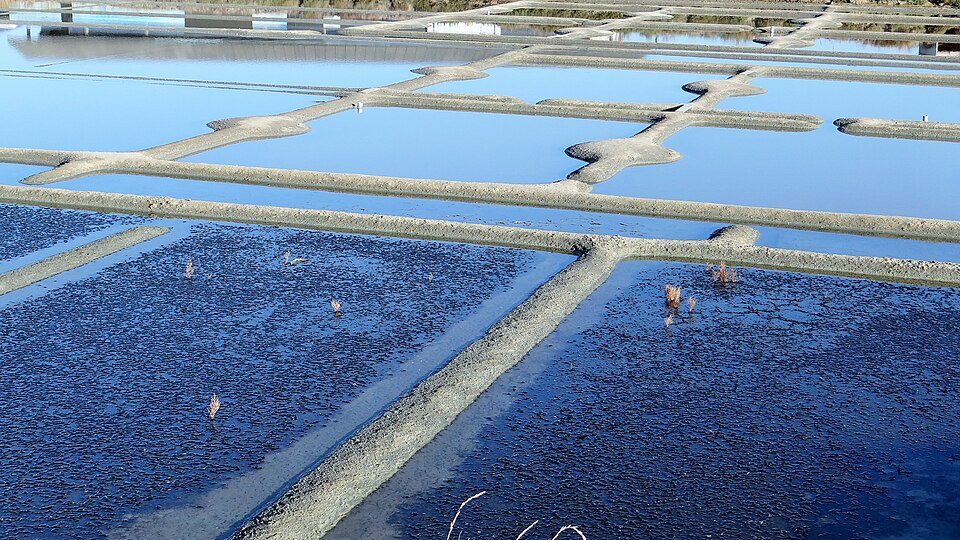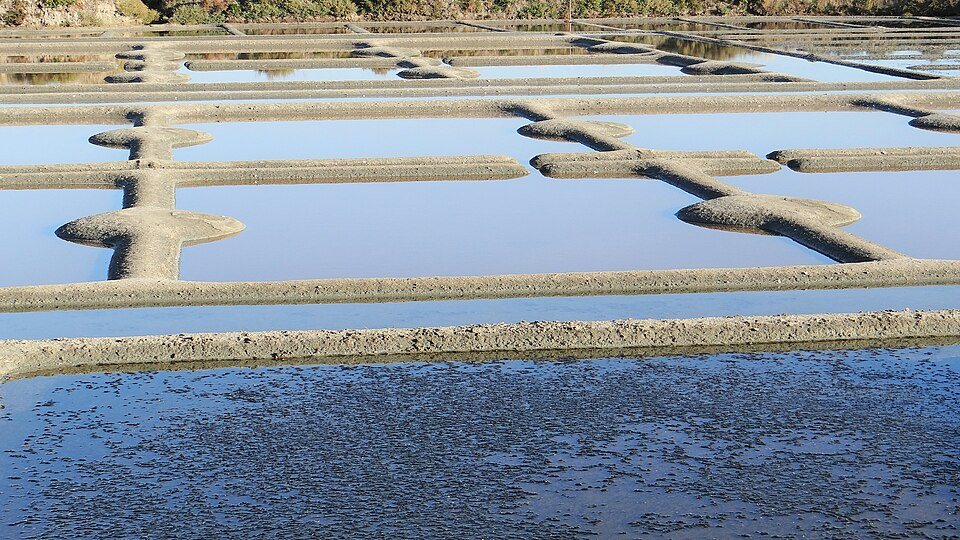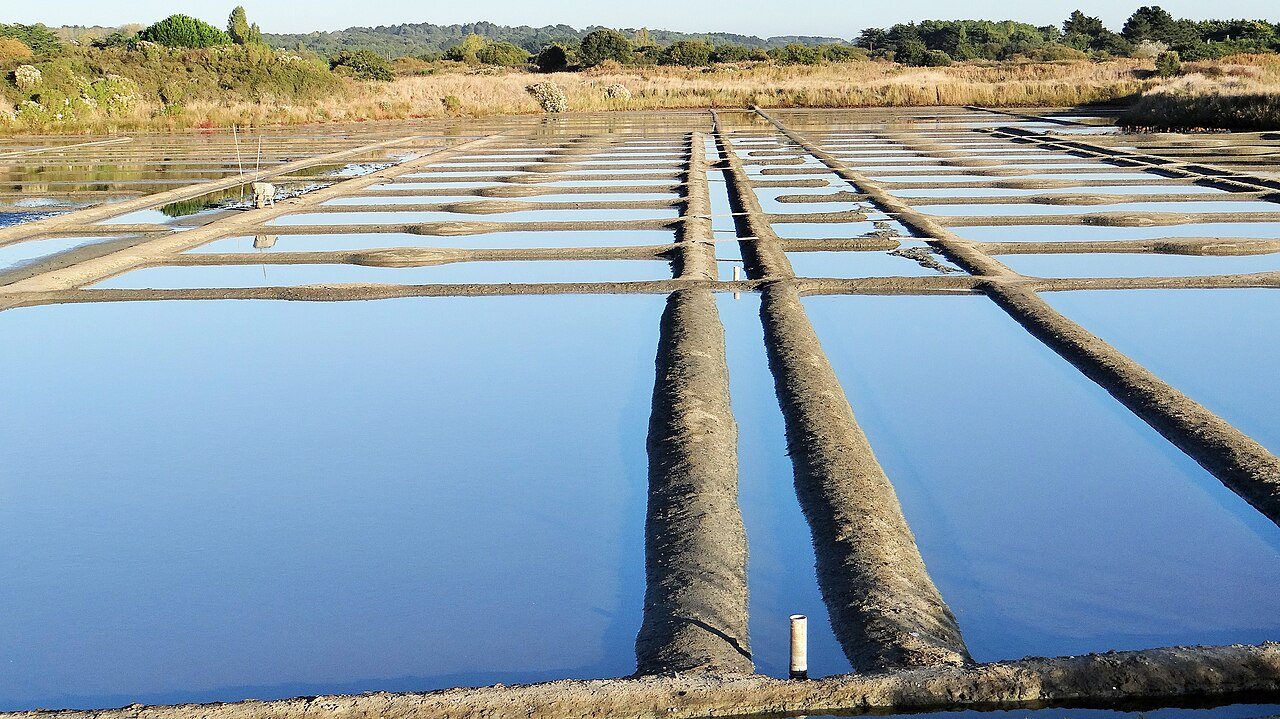
West of Nantes, past La Baule and before the open Atlantic, the land flattens into a checkerboard of shallow pools that catch the light differently depending on the hour and the wind. This is the Guérande salt marsh, one of the few places in France where sea salt is still harvested the way it was centuries ago, by hand, with wooden tools, on a schedule set by evaporation rather than machinery. It is an easy car trip from Nantes and one of the more rewarding ones, because the marsh is not a museum piece: it is a working landscape, and in the warmer months you can watch people doing the actual labor.
How a salt pan actually works
The system depends on gravity and a sequence of basins, not pumps. Seawater is let in from a canal at high tide and then walked slowly through a chain of shallow ponds, each one a little shallower and a little saltier than the last, as the sun and wind pull off water through evaporation. By the time the water reaches the final, lowest pan, called the oeillet, it's concentrated brine, and that's where crystals actually form on the clay floor.
The clay itself matters as much as the water. The pans are lined with a dense local clay that keeps the brine from draining into the soil below, and a paludier spends a good part of the off-season each year repairing and re-leveling that clay by hand, because a crack or an uneven patch ruins the whole cycle. None of this is incidental backdrop for a nice photo; it's infrastructure, maintained the same way every year, and a lot of what looks like a flat, empty landscape from a distance is actually a grid of individually tended basins.
What gets harvested, and by whom
Two products come out of the same oeillet, and they're gathered differently. Gros sel, the coarser gray salt, settles and is raked up from the bottom with a tool called a las, a wooden rake with a long flat blade suited to dragging salt without scratching into the clay beneath it. Fleur de sel is the thin, delicate crust that forms on the surface on hot, dry, breezy days, and it has to be skimmed off before it sinks or dissolves back in, using a flat wooden tool called a lousse. It's physically demanding work done standing in the pan itself, and the timing is dictated entirely by weather: a paludier checks the marsh daily during the season because a shift in wind or a sudden rain can wipe out a day's fleur de sel entirely.
The people who do this are called paludiers (and paludières), and it's a trade that has been passed down through families here, though it's also one that newer entrants have taken up in recent decades as demand for the hand-harvested product grew. If you're walking or cycling along the marsh paths in season, you'll often see them out working, bent over the pans with long-handled tools, and it's worth pausing at a respectful distance rather than wandering into private holdings, since these are working livelihoods, not installations.
Getting a closer look
The town of Guérande itself, with its intact medieval ramparts, sits just above the marsh and makes a natural anchor for a visit, letting you walk the walls and then head down into the flats on foot or by bike along marked paths that skirt the pans without cutting through them. Several operators based in and around the marsh run guided walks that take you out onto designated paths with someone who can point out the different stages of a pan and explain what you're looking at in more technical detail than a casual wander will reveal. There's also a visitor center dedicated to the salt trade, with exhibits on the tools and the history of the marsh, which is a sensible stop if you want context before or after being out in the pans themselves. For specifics on which walks run when and how to book a guided outing, check directly with the operators rather than relying on secondhand schedules, since the harvest season and the available tours shift with the weather and the calendar year to year.
A few practical notes that save people trouble: the marsh is genuinely flat and shadeless, so plan for sun exposure even on a day that looks overcast, and wear shoes you don't mind getting muddy if you go off the main paths. Cars can get you to parking near Guérande and near the smaller town of Saillé, which sits closer to the heart of the marsh and is a good base for a shorter walk if you don't want to drive further around. Le Croisic, a working fishing port, is close enough to combine with a salt marsh visit if you want to turn the day into a longer loop along the coast.
Bringing a bit of it home
Salt from Guérande turns up all over Nantes, in grocery stores and in the kitchens of restaurants that make a point of using it, so you don't strictly need to buy any at the source. But picking some up directly from a cooperative shop or a roadside stand near the marsh, where it's sold loose by weight rather than packaged for export, gives a better sense of the range between the everyday gros sel and the more prized fleur de sel, which is handled and priced differently because it's gathered in much smaller quantities. If you want to taste the difference properly, hold off on using fleur de sel in cooking and instead finish a dish with it at the table, which is the only way the texture and the brief crunch actually register.
A day trip here pairs naturally with a broader look at how this region earns its keep beyond Nantes's own riverside industry; see day-trips for other options nearby, and food-drink if you want to track down where Guérande salt actually shows up on menus back in the city. For the drive out and back, getting-around has the basics on renting a car or checking regional transit options from central Nantes.
In pictures