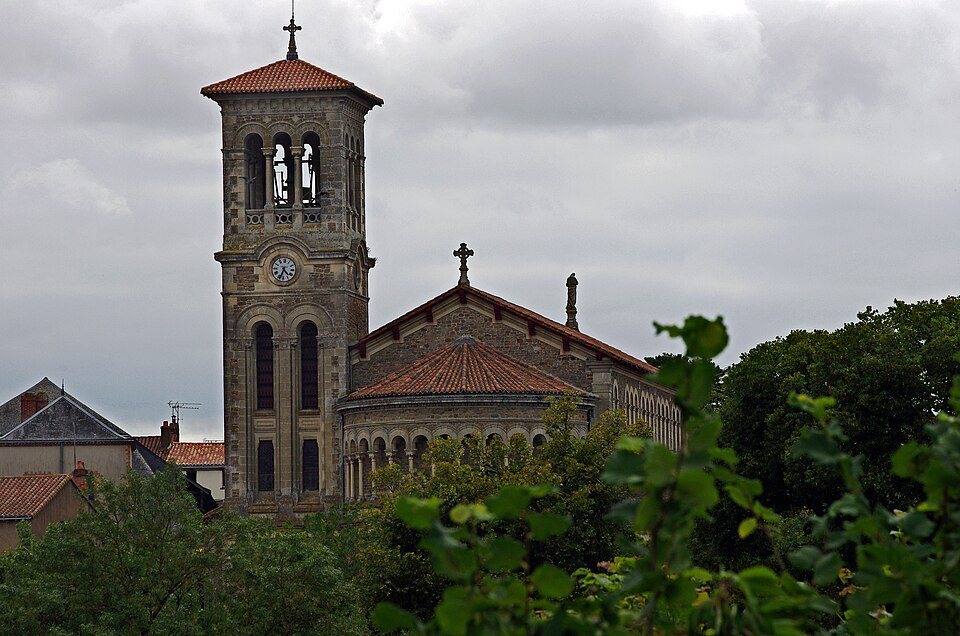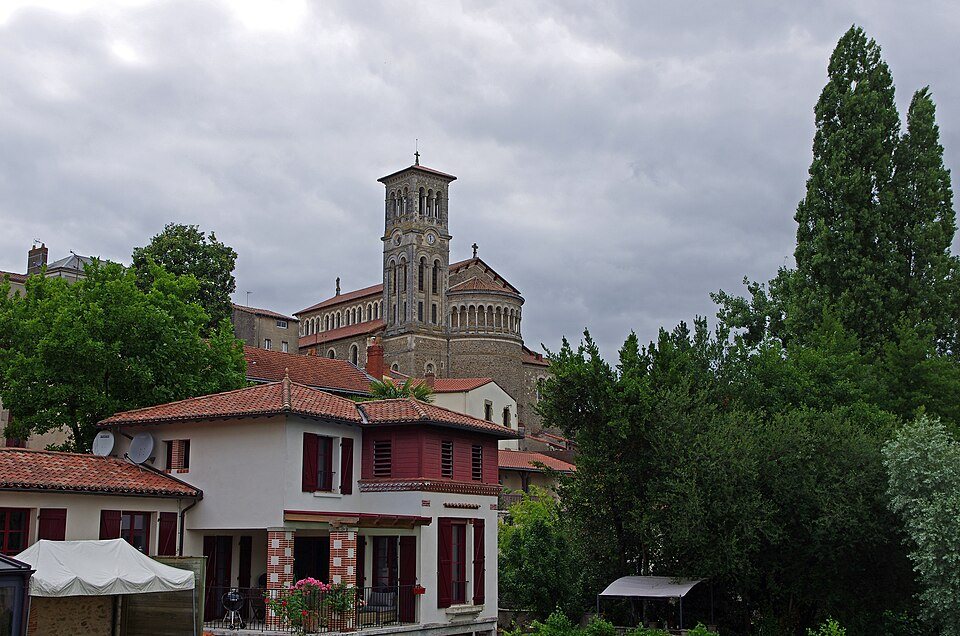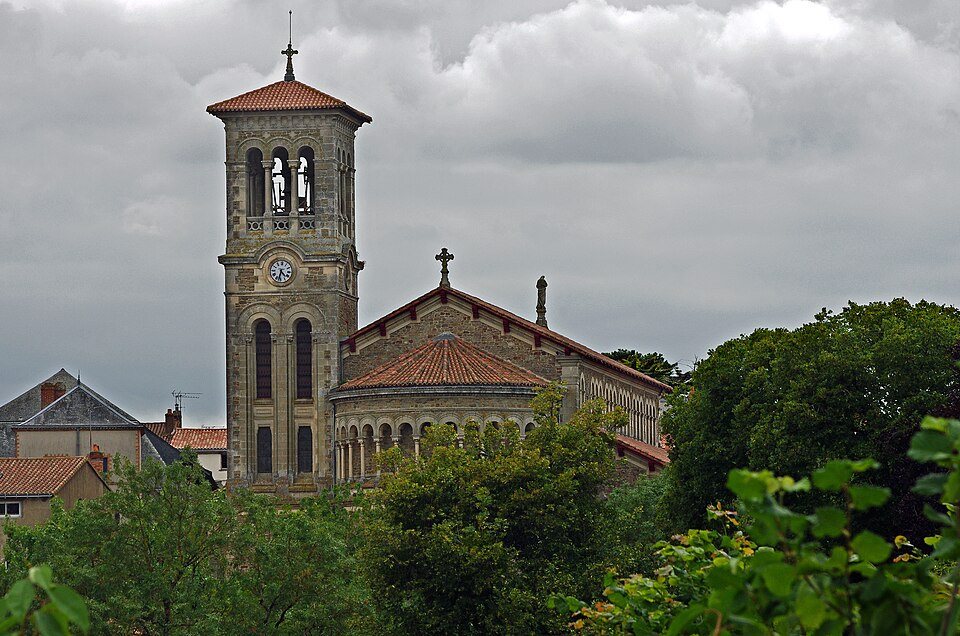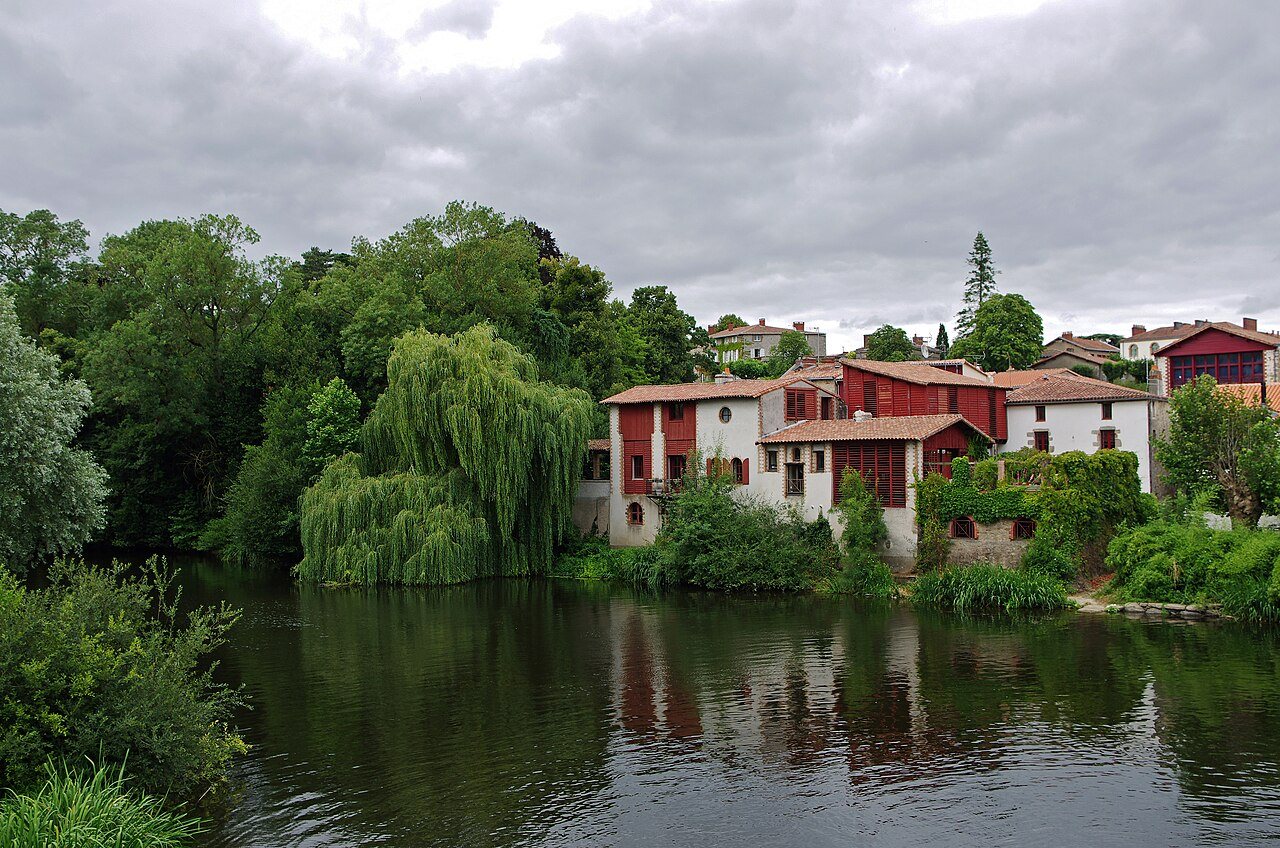
Clisson sits about twenty-five minutes south of Nantes by car, where the Sèvre Nantaise and the Moine rivers meet, and it does not look like the rest of Brittany or the Vendée. The roofs are low and tiled in a warm terracotta, the brick is banded with stone, and the hills above town are planted with cypress-like pines. People call it "the Italian village" and the name is not marketing. The town was rebuilt after a catastrophe, and the people who rebuilt it had just come back from Italy.
Why it looks the way it does
During the Vendée wars of the 1790s, Clisson was burned and largely destroyed. In the years that followed, the Cacault brothers, who had spent time in Italy and in Rome in particular, bought land here and began rebuilding with what they had seen abroad in mind. They were joined by the sculptor François-Frédéric Lemot, who had traveled in Tuscany and the Roman countryside. Between them they reshaped the town and its surrounding hills, using brick, terracotta, and planting that deliberately echoed the Italian landscapes they admired. The result is a genuine architectural transplant rather than a theme: narrow arcaded streets, villas with loggias, and a skyline of umbrella pines that would look at home outside Florence.
The ruins of the medieval Château de Clisson, which predate all this by centuries, give the town a second, older layer. The fortress was damaged in the same conflict and never fully rebuilt, so what you see today is a shell of towers and curtain walls on a rocky spur above the river, with the town's Italianate halo built up around it afterward. Visiting both in the same walk is the point: a Breton-Angevin medieval stronghold wrapped in a nineteenth-century Italian fantasy.
What to actually walk around
The Parc de la Garenne-Lemot, on the far bank of the Sèvre Nantaise, is the clearest expression of the Italian idea. Lemot designed it as a romantic landscape garden dotted with follies, statues, and a villa, planted with the same pines and cypresses that define the town's silhouette. It rewards slow walking rather than a checklist: paths climb and dip along the river, and the views back toward the château ruins are the ones that end up in everyone's photos, whether they planned to take one or not.
Back in town, the old bridges over the Moine and the Sèvre are worth crossing more than once, since the town looks different from each bank. The covered market halls and the narrow commercial streets near the château keep a more ordinary, workaday French-town feel, which is a useful contrast to the parkland. If you have time for only one extra stop, look for the viewpoints along the river below the château walls, where the ruins, the water, and the pines line up in a way that explains the nickname better than any plaque will.
Clisson is also the administrative heart of the Muscadet wine region, and vineyards start more or less at the edge of town. This is not a wine-tasting itinerary by default, but if you are driving rather than taking the train, a short detour into the surrounding countryside will put you among the vines within minutes, with small producers along the back roads rather than a formal visitor circuit.
Getting there and timing the visit
The straightforward way to reach Clisson from Nantes is the regional TER train, which runs a direct line south and drops you within easy walking distance of the old town and the château. Trains run at a reasonably steady frequency through the day, but service thins out on Sundays and holidays, so it is worth checking the current timetable with SNCF Connect or the TER Pays de la Loire app before you leave rather than assuming a train will be along shortly. Driving is the other obvious option, particularly if the vineyards are part of the plan, and parking in town is generally manageable outside of festival weekends.
Speaking of festivals: Clisson is the nearest town to the Hellfest metal festival grounds, held each summer a short drive away. If your visit lands near those dates, expect the town to be unusually full of festival-goers and public transport and parking to be under real pressure. Outside that window, Clisson is a quiet, almost sleepy stop, which is part of its appeal as a day trip from Nantes.
The château ruins and the Garenne-Lemot park both operate on their own seasonal rhythms for opening and guided visits, and these change through the year, so confirm current hours directly with the château's and the park's own visitor information before building a tight schedule around them. The town itself, its bridges, streets, and viewpoints, is open and walkable at any hour, which makes it easy to treat the monuments as the optional extra rather than the whole trip.
A full day is enough to cover the château, a loop through the Garenne-Lemot park, lunch in town, and a wander along both riverbanks, with time left over for a vineyard detour if you have a car. If you are working from Nantes without a car and want to combine this with other half-day ideas, it pairs naturally with other trips covered in day-trips and fits well into a broader itinerary that treats the city center and its surroundings as two separate rhythms: dense medieval and nineteenth-century Nantes on one day, and this unexpected Italian outpost on another. For the practical side of getting back and forth, the general transport notes in getting-around cover how the TER regional trains connect to Nantes' own tram and bus network once you are back in the city.
In pictures